
Romans 9: Two VERY different takes!

An advert for some Bible app popped up on my feed today in which they argued that Romans 9 was the hardest chapter to understand in the whole of the New Testament.

As I had never thought it challenging, I asked Google’s Gemini if this were actually true; if some Christians thought it was a challenging chapter.

The chapter challenges traditional assumptions about fairness, salvation, and God’s covenant promises to Israel. Here are the primary reasons theologians, pastors, and believers find it so difficult:

Here’s its response:

“Christians often call Romans 9 one of the hardest chapters in the New Testament because it dives headfirst into the deeply complex intersection of divine sovereignty (God’s absolute control and freedom) and human free will/responsibility.

1. The Shocking Language of Election and Predestination

In verses 11–13, the Apostle Paul uses the example of Jacob and Esau before they were even born—and before they had done anything good or bad—to state:

“Jacob I loved, but Esau I hated.”

  • The Challenge: This passage is frequently cited in the fierce debate between Calvinism (Reformed theology) and Arminianism. Calvinists see it as a clear-cut defense of unconditional election and predestination, while Arminians argue Paul is talking about corporate service or historical roles rather than individual eternal salvation.

2. The Apparent Threat to God’s Justice

Paul anticipates the reader’s instinctive objection in verse 14: “What shall we say then? Is there injustice on God’s part?” His blunt response—“By no means!”—is followed by quoting God’s words to Moses: “I will have mercy on whom I have mercy, and I will have compassion on whom I have compassion” (v. 15).

  • The Challenge: To human logic, choosing some people for mercy while passing over others feels inherently “unfair.” It forces readers to grapple with a view of God that transcends human standards of egalitarian justice.

3. The Problem of Pharaoh and Human Responsibility

To illustrate his point further, Paul brings up Pharaoh, stating that God raised him up specifically to show His power and hardened whomever He wanted to harden (verses 17–18). This immediately prompts another objection in verse 19: “Why does he still find fault? For who can resist his will?”

  • The Challenge: If God hardens a person’s heart and then holds them accountable for being hardened, how can humans truly be held morally responsible for their choices? Paul doesn’t offer a neat philosophical reconciliation; instead, he rebukes the questioner: “Who are you, O man, to answer back to God?” (v. 20).

4. The Metaphor of the Potter and the Clay

Paul uses the vivid imagery of a potter shaping lumps of clay out of the same batch—making some vessels for honorable use and some for dishonorable use (verses 20–23).

  • The Challenge: This metaphor pushes readers to confront the absolute asymmetry of the Creator-creature relationship. It challenges the modern, highly individualistic worldview that places human autonomy at the center of existence.

5. The Heartbreak Over Israel’s Rejection

The immediate pastoral context of Romans 9 isn’t just an abstract theological debate; it’s a deep emotional crisis. Paul is heartbroken that the majority of his fellow Jewish people have rejected Jesus as the Messiah.

  • The Challenge: Paul has to explain how God’s promises to ethnic Israel could seemingly fail if the Jewish nation as a whole missed out on salvation. His answer—that “not all who are descended from Israel belong to Israel” (v. 6)—redefines covenant identity in a way that shocked first-century Jewish listeners and continues to spark debate about supersessionism, replacement theology, and the future of ethnic Israel today.

Ultimately, Romans 9 is considered so difficult because it forces readers to the absolute edge of human comprehension, demanding that they reconcile God’s supreme authority with human accountability—two concepts that the human mind naturally struggles to hold in total balance.”

While this response explained this perspective, in approaching the whole NT through a full Hebraic lens I had never seen these challenges in such a light.

My dear departed (Aug 2023) friend Uriel shared my perspective so I asked Gemini about his translation of this chapter. I was most impressed by it’s response as it summarised the Hebraic perspective and Uriel’s translation very well:


“In his translation and commentary Kosher Paul, Uriel Ben Mordechai approaches the letter to the Romans through the lens of First-Century Second Temple Jewish thought and Hebraic idioms, rather than through centuries of Western, Augustinian, and Reformation theology.

When readers encounter “contradictions” or heavy paradoxes in Romans 9—such as absolute predestination versus human responsibility, or God loving one brother and hating another before birth—those hurdles largely stem through traditional Western lenses (like Calvinism vs. Arminianism).

By shifting the linguistic and cultural framework, Kosher Paul reduces these apparent contradictions for several key reasons:

1. Removal of Hellenistic and Augustinian Frameworks

Traditional translations and interpretations have heavily relied on a theological framework shaped by Augustine, Aquinas, and later Reformation thinkers who read Paul as a proto-systematic theologian addressing abstract, metaphysical questions about individual eternal salvation, an inherited “sin nature”, and airtight legalistic categories.

  • Ben Mordechai treats Paul (Rav Sha’ul) as a Pharisaic Jewish rabbi discussing communal covenant roles, historical callings, and behavioral choices (yetzer hara and yetzer hatov).
  • Stripping away centuries of Latin and Greek philosophical baggage dissolves the rigid “fatalism vs. free will” dichotomy that Western readers project onto Romans 9.

2. Contextualizing “Election” as Corporate and Historical Rather Than Individual and Eternal

In standard Western readings, Romans 9:11–13 (“Jacob I loved, but Esau I hated”) is read as God arbitrarily choosing certain individuals for heaven and others for hell before they are born.

  • In a Hebraic context, such language frequently refers to corporate roles in redemptive history rather than eternal destinations. God chose the lineage of Jacob (Israel) to carry His covenants, oracles, and the lineage of the Messiah, while Esau (Edom) was designated for a different national and historical path.
  • By restoring this corporate, covenantal perspective, the chapter shifts from a harsh puzzle about divine favoritism regarding salvation to a pastoral explanation of how God manages His historical promises to nations and peoples.

3. Viewing “Hardening” through a Biblical-Covenantal Lens

When Paul discusses God hardening Pharaoh’s heart in Romans 9:17–18, Western systems often interpret this as God overriding human agency to forcefully damn an individual.

  • Within a Hebraic and Tanakh (Old Testament) framework, hardening a heart is often the consequence of a progressive trajectory of choices. God utilizes a leader’s existing posture and stubbornness to accomplish His larger historical deliverance (such as freeing Israel from Egypt).
  • The text ceases to be a philosophical trap regarding human freedom and instead aligns with the Hebrew Bible’s view of sovereign orchestration operating alongside human accountability.

4. Emphasizing Choice and Covenant Over “Fatalism”

Throughout Kosher Paul, concepts like sin and obedience are translated to emphasize human agency, moral responsibility, and the ongoing struggle between human inclinations (yetzer) rather than an inescapable ontological curse or a static “sin nature”. Because the Hebrew mindset inherently prioritizes action, consequence, and covenantal loyalty (shema and halakha) over abstract decrees of eternal fate, passages that sound deterministic in English translations take on a much more practical, pastoral tone.

By realigning the vocabulary with its original Jewish matrix, Kosher Paul reframes Romans 9 not as an abstract courtroom trial over who God has arbitrarily predestined for heaven or hell, but as a passionate Jewish letter addressing the historic faithfulness of God to Israel.”

Footnotes:
Uriel passed away very suddenly when he was only in his mid-60’s. I wrote an eulogy about him at the time:

“Today (9th August 2023) on the Mount of Olives with a view of the Temple Mount and the Dome of the Rock in the background, Uriel ben Mordechai (Uri Marcus) was laid to rest.

This was a total devastating shock. He was, in my eyes, still a young man (around my age). He seemed so strong and full of vigour though I know caring for his wife Adi who has not been well for a number of years was time consuming and clearly stressful as were the many lawsuits he was involved in or supporting. Uriel was a zealous and faithful man of God who was a seeker after justice, not just for himself but for all the downtrodden.

I have been privileged to know Uriel for many years and have worked with him on a number of his translations especially Galatians as well as providing the Foreword and some parts of the Introduction to his translation of the Gospel of John (a translation that he finished but which he had not quite readied for publication).


Having spoken and communicated with Uriel many times over the years and also attending his weekly classes for a while, I gained a great deal of insight into this amazing man whose passion for HaShem and Torah was so strong that it was almost tangible. Part of this passion was to re-translate from the earliest extant Greek manuscripts the New Testament (which he knew was a Jewish text), employing a Jewish/Hebraic pre-suppositional position. This Torah-centric approach, while not unique (see the work of the late Prof. David Flusser and his students at the Jerusalem School of Synoptic Research), was certainly extremely rare. But it proved to be incredibly enlightening. While very few to date may have read his translations of Galatians, Romans, Hebrews and the Gospel of John, I am convinced that the Day will arrive when they will be held in the highest of esteem by the great multitude and the Jewish People will recognize Uriel as one of their cherished and very valued sons.

Sadly, many Christians in particular, and it seems with agendas to protect, have sought to question his skill and even his integrity. But having conversed with him in depth and breadth over much time I am convinced in my heart that his simple, unpretentious but sincere, honest and zealous efforts at translating the words of the Jewish authors of the New Testament resulted in revelatory Truth.

His translations really are the best and most consistently aligned with their foundational text of the Hebrew Bible.

Uriel still had so much to offer this world from his tireless support of his wife to his passion for seeking justice for all, to his incredible work of translating and teaching the New Testament.

I learned so much from Uriel. His insights on many subtle and/or challenging portions of the New Testament were invaluable and often opened new vistas of understanding.

He is very sadly missed! To all who knew Uriel and mourn his passing: ‘May God console you among the other mourners of Zion and Jerusalem.”

Footnote 2:
The response from Gemini regarding Uriel’s translation mentions the inclinations (yetzer). Here’s my article explaining this very Hebraic concept in a little depth:
https://globaltruthinternational.com/2017/06/10/the-yetzer-hara-and-yetzer-hatov/
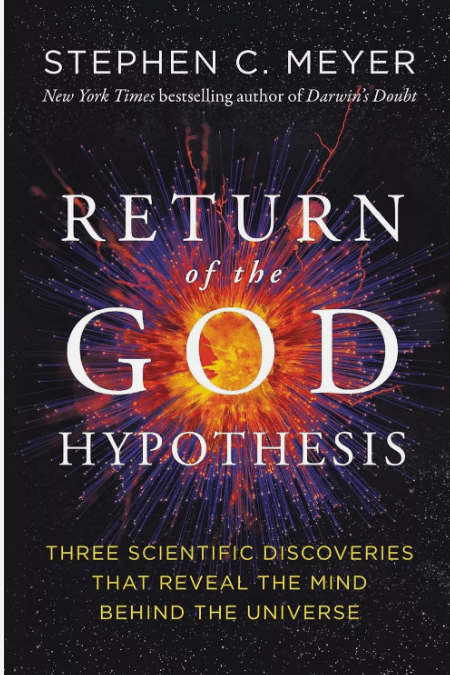
The Return of the God Hypothesis

The Return of the God Hypothesis

I wrote this 3 years ago and was reminded of it today:
Stephen Meyer’s third book, ‘The Return of the God Hypothesis: Three Scientific Discoveries That Reveal the Mind Behind the Universe ‘ is most impressive!

View at https://returnofthegodhypothesis.com/

His other 2 main books, ‘Signature in the Cell’ and ‘Darwin’s Doubt’ were absolute classics that give abundant support for the scientific paradigm of Intelligent Design (ID).

I have a whole section on my main website, circumcisedheart.info on ID.

Some of the historical facts that he introduces have really surprised and delighted me. Having spent many years at University studying Physics, and even reading some biographies on Physicists like Einstein I still found some of his insights really illuminating. I am also dismayed and a little disappointed with myself to learn that there were certain great questions of Physics that I don’t ever remember asking, such as how gravity actually works!

I learned all the laws of Universal Gravitation, etc., and could apply them as needed, but I don’t remember asking some of the deeper questions. 

In learning Physics and doing research in areas of Physics (for me it was mainly Electronics, Microwave Theory and Atmospheric Physics) I didn’t really need to know much of the history of Physics beyond what I learned in a few years of Physics classes at High School but Meyer has specialized in the history of Science, so he brings a wealth of great insights and historical narratives. 

A couple that have really struck me:
I knew a fair bit about Isaac Newton and the fact that he spent more time on his theological studies than his scientific research (if the church and government had known of some of his doctrinal positions they would have dumped him in prison, such as his rejection of the Trinity). And I knew his mathematical model of Universal Gravitation was a massive advance at the time.

But I was not aware that it had led him to argue for an infinite Universe (to balance the gravitational forces of the stars, etc.). This position was problematic for him from a theistic perspective.

Almost three hundred years later, Albert Einstein introduces his General and Special Relativity theories and turns the world of Physics on its head. But as he understood his own theories at the time, and as he rejected the idea of a Creation of the Universe from nothing (i.e the Genesis story), he had to introduce a special ‘fudge factor’, his cosmological constant to try to argue for a steady state Universe that had existed eternally. While the evidence mounted against his cosmological constant for years, it took him close to 20 years to finally overcome his own ego and accept he was wrong!

This from one of the greatest minds in all human history!

If an intellect as great as Einstein can so struggle to place facts and logic ahead of his own pet pre-suppositions and biases, how hard must it be for the rest of us!!

I am firmly convinced that this book should be read be all who wish to reject atheism and the evils that it engenders. This book should also be required reading in Senior High School Science classes.

In Meyer’s ‘Return of the God Hypothesis’ he argues that Theism provides a better explanation of how the first cell was created along with subsequent innovations in the history of life.

He states that “there are 3 keys facts about biological and cosmological origins:

  1. the material universe had a beginning
  2. the material universe has been finely tuned for life from the beginning, and
  3. large discontinuous increases in functionally specified information has entered the biosphere since the beginning.

Deism can explain the first two of these facts, but Theism can explain all three.”

Science today is increasingly finding supporting evidence for Theism and for a Creation event as described in the Bible. The worm has turned! Science truly supports a Creation event ‘ex-nihilo’   (creation out of nothing).

For more on Intelligent Design go to ID @ Circumcised Heart

I also refer to Meyer’s Darwin’s Doubt in this blog post about abductive reasoning:
https://luke443.blogspot.com/2018/01/understanding-abductive-reasoning-and.html

The Power of Vulnerability:

Brene Brown is a social researcher. She has a very powerful message to share that she has found through her research.

She argues that human “connection is why we’re here. It’s what gives purpose and meaning to our lives.”

From her research she divided people into two basic groups; those who have a strong sense of love and belonging (and thus feel connected), and those who really struggle for it (and thus feel disconnected).

And here’s the kicker, here’s her revelation from her research:

“The people who have a strong sense of love and belonging believe they’re worthy of love and belonging.” 

She found that these people are “whole-hearted.”

That they had a sense of courage, where she uses the original definition of “tell(ing) the story of who you are with your whole heart.”, and thus having the courage to be imperfect.

They had the compassion to be kind to themselves first and then to others.

And “as a result of this authenticity, they were willing to let go of who they thought they should be in order to be who they are, which you have to absolutely do that for connection.”

And they “fully embraced vulnerability.”

They believed that what made them vulnerable made them beautiful. This means that they have “the willingness to say, “I love you” first … the willingness to do something where there are no guarantees …”; the willingness “to invest in a relationship that may or may not work out.”

Brene argues that vulnerability is “the birthplace of joy, of creativity, of belonging, of love.”

Yet, as she also discovered from her research we all have a tendency to numb our vulnerability, but the problem is “that you cannot selectively numb emotion.”

“You can’t numb those hard feelings without numbing the other affects, our emotions. You cannot selectively numb. So when we numb those, we numb joy, we numb gratitude, we numb happiness. And then, we are miserable, and we are looking for purpose and meaning, …”

Instead she argues that we need to accept our feelings of vulnerability because it means we are really alive, and we need to “believe that we’re enough.”

I strongly recommend you listen to her TED talk here.

In reflecting on this I see many ways in which our upbringing can predispose us to being in one group or the other.

With an upbringing by wise and loving parents we should grow into adults who have this sense of belonging and being worthy.

Yet there are many factors that work against this, not just our natural tendency to question and second-guess ourselves, and perhaps lack the confidence to be authentic due to peer pressure, etc., but a whole media push to constantly tell us we are not good enough without buying into the latest fad or getting the latest toy or gadget, etc., or being part of some special group that ‘has it all’.

Also, I suspect for many brought up in recent decades within a Christian environment, the false ‘Original Sin’[1] doctrine has been far from helpful here as it tries to convince people that they are at their core, and from birth, sinful and depraved beings with little hope of redemption without miraculous external support.

Rather Brene’s research rings so true with foundational Biblical principles. Consider the Sh’ma (Deut 6:4 …) for example and the two greatest commandments according to Yeshua.

 Sh’ma, Yisra’el:
“Listen, O’ Israel: YHVH is our God, YHVH is one!
You must love YHVH your God with your whole mind, your whole being, and all your strength.
These words I am commanding you today must be kept in mind, and you must teach them to your children and speak of them as you sit in your house, as you walk along the road, as you lie down, and as you get up…”


And Leviticus 19:18: “…love your neighbour as yourself; I am YHVH.”

You cannot truly love your neighbour unless you love yourself. True love and devotion to the Almighty should also being the revelation that you are indeed fearfully and wonderfully made, and you cannot hope to give your all in loving God if you find yourself unworthy.

But you can change!

You can grow in acceptance of yourself; in being more authentic; in being ‘whole-hearted’ so that you can give ‘whole-heartedly’ to God!

For more please see my article ‘You Shall be Holy’[2] and my ‘The Ten Happiness Principles’[3] on Udemy.

Note:  
The two groups of people that Brene refers to are not those who are very gregarious and love being around others, compared with those who prefer a more solitary life. This was not the distinction she was making.

I think in this respect, there is also a lot going for the ‘solitary life’ or at the very least for times of peace and quiet and times of reflection away from the ‘madding crowd’, including family, etc. But Brene was instead contrasting 1) those who believe they’re worthy of love and belonging with 2) those who don’t.

Her argument is that those who don’t feel worthy are more likely to fall for addictions; to feel dis-connected (which is not at all the same thing as enjoying solitude), to struggle to find joy and happiness. Someone who feels worthy is more easily able to be vulnerable, and in turn such people are more easily able to ‘hear’ the lessons that God gives us every day and grow from them.

A lack of a sense of worthiness in turn leads to placing barriers and walls which not only lead to disconnection but inhibit any openness to growth and learning.

[1] See this excellent article for more on this very damaging doctrine – https://goo.gl/HVrhiF

[2] https://globaltruthinternational.com/2015/03/21/you-shall-be-holy-introduction/

[3] https://www.udemy.com/the-ten-happiness-principles/

The Ten Happiness Principles #10

We are now up to Happiness Principle #10.

Before we go into any details on this 10th Principle, let us recap a little.

We have been working through Rabbi Jonathan Sack’s Ten Happiness Principles and for each one I have been adding some personal reflections. It should be obvious already that Rabbi Sack’s Principles are not just sweet sentiments, sugary illusions or even the power of positive thinking. There do not declare that we simply need to become beautiful, wealthy and successful. Rather, his principles are all based around a life of values, meaning and significance. These are eternal principles.

Psychologists who study happiness inform us that there are essentially three main types:

1)   Happiness from pleasurable pursuits that gratify the senses such as good food and wine, and of-course sexual gratification;

2)   Happiness that comes form being fully engaged in an enjoyable activity so that you lose sense of time. For some this may be fishing, or playing a sport or even just listening to your favourite music;

3)   Happiness that comes from giving, from altruistic behaviour. Being involved in altruistic actions has also been shown to change our brain chemistry. It actually changes who we are.

While the first two type are somewhat culturally dependent, the third is very much the same in its impact and effectiveness across all cultures, genders and ages.

The third type of happiness is also most often promoted by religious philosophies and groups. Thus religions generally add meaningful happiness (though clearly there are exceptions to this). Meaningful happiness appears to extend life as well.

So now we come to Happiness Principle #10: Transform suffering.

Quoting Rabbi Sacks:

“Perhaps the oldest question in religion is: “Why do bad things happen to good people?” But there are two ways of asking this question. The first is, “Why has God done this to me?”

Never ask this question, because we may never know the answer. God cares for us, but He also cares for everyone and everything. We think of now; God thinks of eternity. We could never see the universe from God’s point of view. So we will probably never find the answer to the question: “Why me?”

But there is another way of asking the question.

“Given that this has happened, what does God want me to learn from it?
How is He challenging me to grow? How is He calling on me to respond?”

Asking it this way involves looking forward, not back. “Why did God do this?” is the wrong question.

The right one is: “How shall I live my life differently because this has happened?”

This is a huge change of emphasis and perspective. It is so great, it is almost a reformation!

It involves first an acceptance of life unhelpful or unwanted life events, and an acceptance that God is still God. Just because some event happened to me that I didn’t want, doesn’t mean that I should question the Creator or His role in my life. The practical and forward looking response is to accept that this unwanted event has occurred and how can I best move forward in light of this truth. It’s an approach that is living in the here and now while still eagerly awaiting the better age to come.

So from this attitude, we should recognize that an attitude of praise is the natural consequence of such an approach.”

Which of course brings us full circle back to Happiness Principle #1.

In my ‘Amazing Grace’ article I talk a little about ‘Tikkun HaOlam’ (repairing the world). This is clearly just another way of stating the principle of ‘Transforming Suffering’.

To quote Rabbi Sacks again:

“Abraham sees a palace. That means that he sees the world has order. Therefore, it has a Creator. But the palace is in flames! – which means the world is full of disorder. It is full of evil, violence, injustice. Now nobody builds a building and then goes away and deserts it. Therefore, if there is a fire there must be somebody in charge to put it out. The building must have an owner. Where is he? And that is Abraham’s question. Where is God in this world?

That is the question that gives Abraham no peace. Here, if I am right, that is the starting point of Jewish faith.

In Judaism, faith does not begin with an answer. It begins with a question. It doesn’t begin in harmony. It begins in dissonance.

Here it is: if God created the world then God created man. Why then does God allow man to destroy the world? How can we reconcile the order of the world with the disorder of human society? Can God have made the world only to desert it?

That is Abraham’s question. Can it be the world has no-one in charge, no owner? That is his question. …”

Rabbi Sacks goes on to explain that there are only two logical possibilities here and what they are and imply, but that Abraham rejects both of them!

“ … Either God exists, in which case there is no evil.

Or evil exists, in which case there is no God.

But supposing both exist? Supposing there are both God and evil? Supposing there are both the palace and the flames?

Now if that is so, if my interpretation is right, then Judaism begins not in the conventional place where faith is thought to begin, namely in wonder that the world is. Judaism begins in the opposite, in the protest against a world that is not as it ought to be.

At the very heart of reality, by which I mean reality as we see it, from our point of view, there is a contradiction between order and chaos: the order of creation and the chaos we make.

Now the question is: how we do we resolve that contradiction?

And the answer is that that contradiction between the palace and the flames, between the world that is and the world that ought to be, cannot be resolved at the level of thought.

It doesn’t exist! You cannot resolve it! Logically, philosophically, in terms of theology or theodicy, you cannot do it!

The only way you can resolve that tension is by action; by making the world better than it is.

That is the only way you can lessen the tension between the palace and the flames. When things are as they ought to be, when there is only a palace and no flames – then we have resolved the tension. Then we have reached our destination. But that is not yet.

It was not yet for Abraham and it is not yet for us. And from this initial contradiction, from this cognitive dissonance, are born the following … fundamental features (of Judaism):

Firstly, the primary thing (in Judaism) is ‘doing’, is action, is deed, is mitzvah. Because only the mitzvah makes the world a little less dissonant between what it is and what it ought to be.

Secondly: the whole programme of Judaism, the project of the Torah, is ‘tikkun olam’ in the precise sense ‘mending a fragmented, fractured, world’. …”

This is ‘transforming suffering’; this is the vital 10th Principle that ultimately and most powerfully impacts all the others.

This is the principle, if heeded and acted upon by a significant number, that will change the world and not just make it a happier place for the individual seeking happiness, but for all around them and ultimately, or at least potentially, for all the world.

Begin here. Begin with ‘transforming suffering’; begin by finding someone ‘near’ you in pain and work to ease or alleviate their pain.

This will not only help them; this will not only mean that you are truly ‘loving your neighbour’ (the 2nd Tablet of the Ten Commandments), but also this will improve your world and your happiness and help you to implement all the other 9 principles. When you do these, through them all, but perhaps most powerfully, through the ‘silence of your soul’, you will encounter the Almighty in a more powerful way and come to love Him so that you are ready to heed the call to  ‘love God’ (and so obey the 1st Tablet or the first five of the Ten Commandments, the Moral Code of the Universe!).

You will now find that you are indeed experiencing and obeying the two greatest commandments:

Mark 12:28-31

“28 One of the Torah-teachers came up and heard them engaged in this discussion. Seeing that Yeshua answered them well, he asked him, “Which is the most important commandment of them all?” 29 Yeshua answered, “The most important is, ‘Sh’ma Yisra’el, Adonai Eloheinu, Adonai echad [Hear, O Isra’el, the Lord our God, the Lord is one],
30 and you are to love Adonai your God with all your heart, with all your soul, with all your understanding and with all your strength.’

31 The second is this: ‘You are to love your neighbor as yourself.’

There is no other commandments greater than these.” – Mark 12:28-31

So to recap, here are the Ten Happiness Principles as suggested by Rabbi Jonathan Sacks that I have discussed and elaborated on, over the last few blog posts:

They are:

1. Give thanks;
2. Praise;
3. Spend time with your family;
4. Discover meaning;
5. Live your values;
6. Forgive;
7. Keep growing;
8. Learn to listen;
9. Create moments of silence in the soul; and,
10. Transform suffering.

Shalom!

The Ten Happiness Principles: #1

Finding Happiness and Finding God: 

One of the greatest minds of this era, and one of the greatest thinkers in Judaism is, in my opinion, Rabbi Jonathan Sacks (the very recently retired, Chief Rabbi of London). He gives what he believes are the top ten most important things we can do to find happiness. I wish to give his top ten and expand a little on each one through the next 10 short blog posts.

Some research studies have shown the Westerners, despite years of improving economic conditions, are generally no more happy than they were, and continue to seek the answers to their lack of happiness, through the masses of pop psychology offerings.

Research does appear to suggest that the wealthier people are, the happier they are (to some degree at least) and yet, research also seems to suggest that when adults have children they end up being less happy!!?

Given all the significant challenges of trying to quantify such as elusive emotion, or state of being, as happiness, perhaps we shouldn’t rely to heavily on such research!

At the same time, we all can reflect on our own personal experiences and on anecdotal evidence from the life experiences of our closest family members and friends, and how their happiness has changed through various significant life events.

For example, I saw first-hand how someone, very close to me, overcame a life-time of severe depression by taking on a job which involved taking significant responsibility for the welfare of vulnerable members of society.

I believe that these 10 Happiness Principles are 10 action steps which are foundational to a good and happy life. elizah1

Happiness Principle #1:  Give thanks:

Being appreciate for what we have is always a good approach that demonstrates a good attitude. There seems no question that those who are appreciative for whatever good, no matter how small or great, that comes their way, are generally much more content with their lives, and hence less jealous of others and consequently happier.

Part of this appreciation is the recognition that we normally have no control over the circumstances, or country, or economic state we are born and grow up in, but as adults, we do have control over how we respond to our personal circumstances.

As Rabbi Sacks states it: “For it is not what happens to us on which our happiness depends.  It depends on how we respond to what happens to us.” 

Of-course, that’s easy for him to say!  In reality, the practice of a good attitude is never easy!

To awake and start the day by being thankful that you have the day, that you are alive is a great start. Even being thankful that your normal bodily functions are working helps to engender a sense of calm and serenity.

The first waking prayer of Judaism fits this mold. It states: “I thank You, living and eternal King, who has restored my soul in mercy. Thank You, God, for giving me back my life.”

Giving thanks to the Almighty is a very common refrain in the Psalms. Just a few examples are Ps 7:17. 9:1.18:49, 30:4, 33:2, 35:18. 44:8, 45:17, 53:9, 54:6. 57:9. 75:1, 79:13 and so on.

The wording of Psalm 107:1 is often repeated: “Give thanks to YHVH, for he is good, for his loving kindness endures forever.”

This attitude or thankfulness is also quite common in the Apostle Paul’s writings. For example see 1 Thessalonians 5: 14-18

“And we urge you, brothers, admonish the idle, encourage the fainthearted, help the weak, be patient with them all.
See that no one repays anyone evil for evil, but always seek to do good to one another and to everyone.
Rejoice always, pray without ceasing,
give thanks in all circumstances; for this is the will of God in Messiah Yeshua for you.

If  you take the time to read through just some of the many Psalms that speak of giving thanks you will also see what Happiness Principle #2 is.

Next: Happiness Principle #2

Deeds matter more than creeds

Prof Paul Johnson:
“… another characteristic of Judaism: the relative absence of dogmatic theology. … Their view of God is very simple and clear (he’s comparing it with the huge problems of dogmas and innumerable heresies within Hellenistic Christianity). Some Jewish scholars argue that there is (also) in fact, a lot of dogma in Judaism.

That is true in the sense that there are many negative prohibitions – chiefly against idolatry. But the Jews usually avoided the positive dogmas which the vanity of theologians tends to create and which are the source of so much trouble.  They never adopted, for instance , the idea of Original Sin. Of all the ancient peoples, the Jews were perhaps the least interested in death, and this saved them from a host of problems. It is true that belief in the resurrection ansd the afterlife was the main distinguishing mark of Pharisaism, and thus a fundament of rabbinic Judaism. Indeed the first definite statement of dogma in the whole of Judaism, in the Mishnah, deals with this: ‘All Israel share in the world to come except the one who says resurrection has no origin in the Law’. But the Jews had a way of concentrating on life and pushing death – and its dogmas – intro the background.”

The first creed of Judaism (Gaon around 900 CE) did not come into acceptance until Judaism was some 2500 years old! Even Maimonides 13 articles of faith, which have given ‘little rise to controversy’ have not been ‘endorsed by any authoritative body’.

“Judaism is not so much about doctrine – that is taken for granted – as behaviour; the code matters more than the creed.”

Quote from Johnson, ‘A History of the Jews’, p 161 

Or as put in the Mishnah: “Deeds matter more than Creeds”.

While Prof. Paul Johnson is a Roman Catholic, I doubt that few, even Jewish historians (and I love the work of Rabbi Ken Spiro), have given as good a history of the Jewish people as Prof. Johnson – he clearly loves the Jewish people; he explains the rise of both anti-Semitism and Jewish self-hatred so well, and he shows how dependent the entire world really has been on the wisdom and endeavours of the Jewish people.

His book should be read by all Jews (to encourage and uplift them) and by all Gentiles to enlighten them!

It is a big book – it took me awhile to digest but it was so worth it. 

The only time he goes a little wrong in my opinion, is when he tries to explain certain Christian perspectives rather than any Jewish ones!

His personal website is: http://pauljohnsonarchives.org/

Les Miserables: Reconciling God’s attribute of Justice with Mercy

The Tanakh (OT) teaches that the ultimate Lover is He who combines in a perfect blend, justice and mercy (also called loving kindness or grace – unmerited favour).

In Hebrew the word transliterated as ‘elohim’ (often just as God), means ‘God of Justice’ and the word for God that can’t really be transliterated  at all, YHVH means ‘God of Mercy’.

Thus in Exodus we see the Creator of the Universe being described by as the embodiment of both justice and mercy:

“And Elohim (God of Justice) spoke unto Moshe saying: I am YHVH (God of Mercy)” – Ex 6:2

Quoting Rabbi Jeff Kirshblum: “The verse (Exodus 6:2) seems to be contradictory. How can the God of Justice declare Himself to be the God of Mercy? Justice seems to be strict and unyielding. Mercy seems to be lenient and bending.

(This very challenge is addressed in the play, now just out as a movie, Les Miserables – more on this later).

The ancient pagans were confronted by that very problem. How could there be Justice and Mercy co-existing in the world. They concluded that there must be more than one god: gods who constantly struggled for supremacy. The Egyptians in the time of Pharaoh envisioned the great fight between Set, the god of justice, and Horus, the god of mercy.

G-d tells Moshe that there is only one G-d. He has both attributes and each one is constantly present. It is only our lack of perception that has difficulty uniting Justice with Mercy. This concept sums up the very basic philosophy of Judaism. “Hear O Israel! YHVH (the G-d of Mercy), our Elokim (the G-d of Justice), G-d is One” (Devarim 6:4)…

In our own families we play a G-d-like role. We too must temper our Justice with Mercy. Justice and punishment can never be inflicted in a state of anger. Such a punishment will convey the wrong message. Justice can only be served when the punishment is carried out in a state of love…

I once saw a small child run out into the street. A car was rushing by. The driver slammed on his brakes, screeching to a halt inches in front of the child. The mother, who had seen the whole incident from the porch, came running out to her child. She picked up her precious youngster. She hugged him dearly; then she slapped his hands hard. She had tears in her eyes. She screamed at him, “Don’t you ever run out in the street again.” She shook him hard. “Never, ever run out in the street. I love you, poor baby.”

That was Justice and Mercy.” – from http://www.torah.org/learning/outsidethebox/5764/vaera.html

Judaism understands that love is this perfect blend of justice and mercy. When those of us who are parents reflect on how we best deal with our children, perhaps this can teach us this fuller meaning of love. As a parent we learn to give, we learn to put our children’s needs before our own, to recognize that often, their needs must come first, but as they grow we also learn how vital it is to exercise fair judgment with them, to demonstrate and practice justice as well as grace/mercy if we are to raise well-balanced and capable children.

In his famous discourse on loving kindness, Rabbi Eliyahu Dessler states that: ‘Giving leads to love’.

Gila Manolson writes:

“True giving, though, as Erich Fromm points out, is other-oriented, and requires four elements.

The first is care, demonstrating active concern for the recipient’s life and growth.

The second is responsibility, responding to his or her expressed and unexpressed needs (particularly, in an adult relationship, emotional needs).

The third is respect, “the ability to see a person as he [or she] is, to be aware of his [or her] unique individuality,” and, consequently, wanting that person to “grow and unfold as he [or she] is.”

These three components all depend upon the fourth, knowledge. You can care for, respond to, and respect another only as deeply as you know him or her.” – see http://www.aish.com/d/w/48952241.html

Consider how well these 4 attributes are actualized by our Father, the Creator of the Universe. He cared enough to create this world for us and to create us. He takes responsibility for it on a daily and moment by moment basis and yet is also able to delegate some of this responsibility to us, even giving us greater and greater responsibility as we grow and become more capable of handling it.

Also, no-one could possibly respect each and every one of us as our heavenly Father does!  He knows oh so intimately how unique and gifted each of us are because He made us that way and gave us the environment to allow our potential to grow and unfold.

Finally His knowledge of us, is superior to our own. So superior in fact that He calls us to know Him, rather than seek to know ourselves[1], because it is through knowing Him that we may grow to fully be all the reflection and image of Him that he planted within us, and in doing so, come to know who He meant us to be.

In fact, Jeremiah summed up these attributes of the Almighty very well when he wrote:

‘Here is what Adonai says: “The wise man should not boast of his wisdom,
the powerful should not boast of his power,
the wealthy should not boast of his wealth; instead, let the boaster boast about this:
that he understands and knows me —
that I am Adonai, practicing grace,
justice and righteousness in the land;
for in these things I take pleasure,” says Adonai.’ – Jeremiah 9:22-23

If we strive to be like Adonai, then surely we will heed the call of Micah 6:8 and Matthew 23:23.

Which leads me back to Les Miserables. The brilliant teacher, Rabbi Benjamin Blech has written a great article on Victor Hugo’s examination of the challenge of justice and mercy in his play.

I heartily recommend a read of his article ‘Les Miserables and the Bible’ – see

http://www.aish.com/ci/a/Les-Miserables-and-the-Bible.html

Clearly, if we desire to gain the full mercy of our Father we need to learn to repent[2]. I also recommend this article that I have quoted a little from:

“On Rosh Hashana (Yom Teruah), which is a day of judgment mitigated by mercy, a person must establish his right to be present in the next world by answering the objections of the prosecution. One must pass through the dark corridors of justice before he can bask in the sunshine of mercy. On Yom Kippur one is armed with the benefit of the decisions of mercy before he is subjected to the harsh scrutiny of justice.” – from http://www.aish.com/h/hh/yom-kippur/theme/48955531.html

I also love these words from a brother on Facebook recently:

“Repentance is the key, a return to God and His Torah (instructions) through Yeshua the Messiah. Repentance is not just a mantra, is not empty words recited by a preacher and repeated by the penitent. Repentance is not just a passive emotion and a resolve to do better. It is not a new year resolution. Repentance is an attitude change, a change of perspective and direction, an active work, a setting right of wrongs done to God and our fellow man, a hunger for justice to be done, a choice to live in obedience to Torah(instructions) given to us by God. Repentance bears fruit, works and deeds of kindness, it produces a gentleness and a zeal for God, a separated life. Repentance changes one personally and can change a society corporately. A person or people bearing the fruits of repentance will enjoy the blessings and protection of our heavenly Father.” – Leon Hargreaves (FB Post – 26/12/2012)

Shalom, Paul


[1] “The aim of Hebrew religion was Da’ath Elohim (the Knowledge of God); the aim of Greek thought was Gnothi seauton (Know thyself).  Between these two there is a great gulf fixed.  We do not see that either admits of any compromise.  They are fundamentally different in a priori assumption, in method of approach, and in final conclusion…
The Hebrew system starts with God.  The only true wisdom is Knowledge of God.  ‘The fear of God is the beginning of wisdom.’  The corollary is that man can never know himself, what he is and what is his relation the world, unless first he learn of God and be submissive to God’s sovereign will.  
The Greek system, on the contrary, starts from the knowledge of man, and seeks to rise to an understanding of the ways and Nature of God through the knowledge of what is called ‘man’s higher nature’.  According to the Bible, man had no higher nature except he be born of the Spirit.
We find this approach of the Greeks no where in the Bible. The whole Bible, the New Testament as well as the Old Testament, is based on the Hebrew attitude and approach… “  
- Prof. Norman H. Snaith  “Distinctive Ideas of the Old Testament”

[2] “The ability to recognize our sin, to take responsibility for it and to repent is at the core of what is meant by the idea of a Messiah.… the courage to admit guilt, to take responsibility, to change. This is the lesson that the Messiah will one day teach the world. Man controls his destiny. No matter what mistakes he has made, man can fix them.” –  Rabbi Ari Kahn – http://www.aish.com/tp/i/moha/48914512.html

Distressed by the Tragedy of Loss of Life

This weeks Torah Portion, Vayishlach (Genesis 32:4-36:43) contains the story of the reunion of Jacob and Esau. In Genesis 32:8 we read: “Then Jacob was greatly afraid and distressed.”

Many Rabbi’s have asked why the Tanakh repeats the verb here. Many of them go on to argue that Jacob’s being afraid, was because of his fear of the consequences of Esau and his men coming and attacking him. They then suggest that Jacob’s distress was over the moral issue that if he killed Esau or one of his men in self-defense, he would still be greatly distressed at the death of a man created in the image of God.

This brought to mind the tragic life of my PNG brother, Gus.

Gus was living in a secure complex in Port Moresby some years ago and had got up early around dawn, one morning to take his wife and children to the airport. He had some security downstairs, but he heard two of the ‘rascals’ climbing over the balcony to enter upstairs where he and his family were. They would most likely have killed them in the process of stealing their possessions.

Gus a giant of a man both physically and spiritually, went out on to the balcony and fought with them. In the process he ended up knocking one of the men over the balcony and the man died.

When I next met up with Gus after this tragic event and some time had passed, Gus was still struggling with the reality that he had killed another human being. Even though he had, in all likelihood saved his wife and beautiful young children, he still found it difficult to live with. He may have been ‘morally right’ but that did not make his involvement in the tragic loss of a man’s life easy to bear.

Gus went on to do an incredible job of raising his daughter and three sons and then before he had reached the age of 40, with his eldest girl, Yuana still only around 16, Gus had a heart-attack at work and died.

Receiving the news of his untimely passing was one of the most upsetting days of my life. The sun shines less brightly without the great impact of this man of God who was cherished by so many.

Rabbi Sacks writes a great article on this Torah Portion and this moral issue. In it he relates the mixed feelings that the Israeli soldiers had after the great victory of 1967 and quotes Yitzhak Rabin, the Chief of Staff during the war.

“We find more and more a strange phenomenon among our fighters. Their joy is incomplete, and more than a small portion of sorrow and shock prevails in their festivities, and there are those who abstain from celebration. The warriors in the front lines saw with their own eyes not only the glory of victory but the price of victory: their comrades who fell beside them bleeding, and I know that even the terrible price which our enemies paid touched the hearts of many of our men. It may be that the Jewish people has never learned or accustomed itself to feel the triumph of conquest and victory, and therefore we receive it with mixed feelings.”

 Sacks goes on to state: “A people capable of feeling distress, even in victory, is one that knows the tragic complexity of the moral life. Sometimes it is not enough to make the right choice. One must also fight to create a world in which such choices do not arise because we have sought and found non-violent ways of resolving conflict.”

What very wise words, but what a huge challenge, that today, after the UN vote to recognize the ‘State of Palestine’, seems even more challenging and further from resolution.

I recommend reading the whole of Rabbi Sack’s article on Aish –  http://www.aish.com/tp/i/sacks/180748221.html

For some insightful commentary on the UN vote I recommend these articles:

‘Into the Fray: Israel’s infuriating impotence’ By Martin Sherman

http://www.jpost.com/Opinion/Columnists/Article.aspx?id=294033

‘Accomplices in a campaign to annihilate a UN member’ By Shlomo Slonim

http://www.jpost.com/Opinion/Op-EdContributors/Article.aspx?id=293826

and ‘I Stand Ashamed that My Country Voted for the New Nazis’ by Giulio Meotti

http://www.israelnationalnews.com/Articles/Article.aspx/12511#.ULimw46ZQsk

Leaving and Returning: Climbing the Mountain and Returning to Repair the World

This weeks Torah Portion is Parshah Vayeitzei (Genesis 28:10-32:3). It contains the stories of Jacob’s leaving his family to live in the land of Laban and then returning to the land of Canaan to fulfil his destiny and continue the process of creating the Jewish People, a people called to be a Light to the Gentiles.

Rabbi Moshe Avraham Kempinksi has written an excellent article on this Torah Portion this week. In this article is states that “ There will be many times, that the people of Israel will need to leave the comfort of their spiritual existence and venture into the dangers of coping with a world that is both dangerous and menacing”. How true is this statement in this day and age!

This also reminded me of an article by Rabbi Ari Kahn which I quoted last month in my blog ‘Abraham, the Father of the faithful’:

Similarly, for the Jewish People to have an impact on the world, we must first disengage, separate ourselves, and fully explore our unique relationship with God.

There will be times when we must wrest ourselves away from our deep involvement, even our responsibility for the world. We must climb lofty mountains, even engage in divinely-mandated, though seemingly paradoxical, behavior. But we must always remember that eventually we must come down from the mountain, re-engage, return to the people that we left at the foot of the mountain. We must find the language and establish the relationship that will allow us to share with them what we learned at the summit.

The way we can accomplish our universal responsibility is by first becoming separate, different – as holy as we can possibly become. Only this will enable us to fulfill our mission of tikkun olam, to enlighten, to educate, to heal and repair the world.”

– See https://globaltruthinternational.com/2012/10/25/abraham-the-father-of-the-faithful/

I think this rings true for all of us. We all need to take time out, to recharge our batteries, to re-connect with the Almighty, so that we can return to the fray, to the challenges of engaging with the world and trying to positively impact it.

Clearly our Maker knew this and so He created a special Day, the Sabbath for this very purpose. What a thoughtful and loving Father, Creator and King we have!

Moshe’s article is so good that I would really encourage you to read it in full. I have copied it below to make this easy for you:

Vayetze: Going Out (Israel National News – Published: Thursday, November 22, 2012 4:48 PM)

“And behold, I am with you, and I will guard you wherever you go, and I will restore you to this land, for I will not forsake you until I have done what I have spoken concerning you.”The Torah portion of VaYeitze begins with Jacob leaving one place ands with him leaving another. Yet the two words used to describe each “leaving” are vastly different.

When Jacob is leaving the land of Canaan,he is fleeing from his house. He was escaping from a brother who was set to kill him. He was running from a father who may have lost some measure of faith and confidence in his son. He was leaving without knowing when he was to return. And he was leaving into a land of the unknown, and into a future filled with challenges and doubt.

The verse tells us ” And Jacob left Beer sheba, and he went ( VaYeitzeh) to Haran.”( Genesis 28:10) In the midst of Jacob’s running away from Esau he sees the vision of the ladder to the heavens in a dream. In this vision he is promised by G-d , great things.

“ And behold, I am with you, and I will guard you wherever you go, and I will restore you to this land, for I will not forsake you until I have done what I have spoken concerning you.”( ibid :15)

When he returns from the land of Laban we read; “. So Jacob rose (vaYakam) , and he lifted up his sons and his wives upon the camels.” (ibid 31:17) This too occurs connected to a dream. Yet in Haran, it was a very different sort of dream.

” And it came to pass at the time the animals came into heat, that I lifted my eyes and saw in a dream, and behold, the he goats that mounted the animals were ringed, speckled, and striped.”( ibid 31:10) As opposed to the spiritual dream of angels that he dreamt while still in the land, here Jacob dreams about physical goats and material acquisitions. The materialistic seduction of Chutz LeAretz- Exile – seems to have begun to affect Jacob as well. He understands that he needs to leave.

What is to be learned from those two differing words, Vayeitzeh ( and he went out) and Vayakam( and he arose) ?

When we read in the book of Deuteronomy, of G-d’s instructions regarding the going out to war .The verse reads: “Ki Teitzei LaMilchamah – If you shall go out to wage war against your enemy.” (Deuteronomy 21:10) The verse could have simply been, “If you shall wage war?”

The Torah wants us to remember that warfare is not harmonious with our inner essence. In order to go to war you must exit your oasis of spiritual and holy comfort. Yet his must be done only with the purpose of achieving goals of spiritual and national importance.

We see his again with Noah when G-d commands him the following;” ‘Go forth( Tzeh) from the ark, thou, and thy wife, and thy sons, and thy sons’ wives with thee. … be fruitful, and multiply upon the earth.’ ( Genesis 8:16-17).

We see it as well with Jacob’s leaving of the land of his forefathers. Jacob was destined to begin the creation of the Jewish people in the land of Haran. That necessarily involved the spiritual pain of VaYeitzeh.

That is not the case when Jacob leaves Haran. When he leaves the land of Lavan , he is escaping the quagmire of materialism, falsehood and idolatry. In order to do this he must rise up (VaKam) . He must gather his spiritual strength and courage in order to be able to continue to fulfill his destiny in the land of his forefathers.

There will be many times, that the people of Israel will need to leave the comfort of their spiritual existence and venture into the dangers of coping with a world that is both dangerous and menacing. That is what we learn from Jacob’s leaving and his returning. That is what going out to war- ki teitze el hamilchama teaches us. If one’s purpose and goal remains clear ,then the continuation of the verse becomes a promise “. If you go out to war against your enemies,… and Hashem, your G-d, will deliver him into your hands...”( Deuteronomy 21:10)

When this piece was being written, it was still unclear if the Israeli defense forces were compelled to enter gaza or not. Yet the courage of going out from their homes and the courage of entering battles that need to be fought will hopefully bring about the Divine promise of protection. And either way, it is only a matter of time before they do.

It is just as Hashem promised Jacob in his personal “going out”.

“And behold, I am with you, and I will guard you wherever you go, and I will restore you to this land, for I will not forsake you until I have done what I have spoken concerning you.” – see http://www.israelnationalnews.com/Articles/Article.aspx/12477#.UK8rNY6ZQsm

For more on the last scripture quoted and the restoration of the Jewish People to the Land of Israel I recommend the article ‘Israel: Return in Belief or Unbelief’ at circumcisedheart.info.

God is your shadow

We all understand what a shadow is, or at least we think we do. The sun creates a shadow of us that follows us where-ever we go and mirrors exactly an outline of our form.

In Psalm 121:5, we read: “YHVH is your keeper, YHVH is your shade on your right hand”

The Hebrew word (Tzilcha) normally translated as ‘shade’ though, can be translated as ‘shadow’, so we instead get: “YHVH is your protection, YHVH is your shadow to your right.”

The famous Jewish Rabbi, Baal Shem Tov translated it this way and argued that ‘your shadow’ means that HaShem becomes our shadow in this world.

Just as a shadow mirrors the actions of each person, HaShem’s relationship with us becomes a mirror of how we act in His world. Our ways below in this world, arouse and elicit HaShem’s response from heaven above.

Just as a shadow moves in synch with the person and never leaves him, the way we choose to conduct ourselves in the world is the way God conducts Himself with us. If we engage in acts of loving kindness, then God responds in kind, by showing us His infinite loving kindness.

Before we investigate and meditate on this incredible insight, what evidence is there that this insight has real validity?

Let is start with Adam. Consider that after Adam sins, he hears God’s voice and he and his wife hide behind a tree. Obviously, God could see Adam and knew where he was, but nevertheless, God asks ‘where are you?’. God responds here at the level that Adam is at. He moves in synch with him; He acknowledges Adam’s state of apprehension, and rather that overwhelm it with the truth of His all-knowing and all-seeing omni-presence, He acts as if He can’t see where Adam is.

This is not God being temporarily senile!

This understanding is consistent with the concept of ‘The King Who Hides’ (– see https://globaltruthinternational.com/2012/09/23/moses-and-the-king-who-hides/). It is also consistent with the famous declaration of Jeremiah 29:11-14
“For I know the plans I have for you, declares the LORD, plans for wholeness and not for evil, to give you a future and a hope.
Then you will call upon me and come and pray to me, and I will hear you.
You will seek me and find me. When you seek me with all your heart,
I will be found by you, declares the LORD, …”

Note here that the Almighty’s plans await our response; that He waits for us to come to Him, to seek Him. It is only when we seek Him with our everything, that we truly and fully find Him.

Therefore, I see this foundational passage as supporting this incredible insight.

Further, we read in Song of Solomon, which is a great story of the love that the Almighty wishes to share with us: “I am my beloved’s and my beloved is mine …”. This also hints of this reciprocity, this moving in synch.

Is this not what any great relationship is all about, where each one in the relationship is responsive to the other and reciprocates as much as possible in kind?

As a father of 4 grown children, I have always felt that once they grew up and left home, the degree of relationship I have with them is very much dependent on them, on how close and how involved with me they now want to be.

I have done my job in bringing them up and hopefully giving them the teaching (torah), skills and faith to step out with confidence and courage into the world to make their own path. And yet, I desire the relationship to continue, but no longer with me as an authority figure, but as someone there, in the background, also therefore in a sense as a shadow, willing to be there when needed either for physical or emotional support, but mostly hoping that they will turn to me for spiritual support, for help finding their way toward the Almighty, the ultimate Father. So I am ready and willing to relate in synch with them, to be their ‘shadow’.

Thus, as a father, I see myself in a similar light to the way our King and Father relates to us.

So I see much truth in this great Jewish insight. Consider then that our relationship with God is so much dependent of us, on how much we act with loving kindness in our world. Leviticus 19:18 tells us that we are to love our neighbour, if we love God. The more we show love to our fellow man, the more we are in synch with God and the greater our relationship with Him will be, because, as our love for others grows, His love for us, His blessing of us grows in synch!

The Almighty blesses all mankind; He makes the sun shine and the rain fall on all; but He also, as a loving Father, wants more.

I believe He wants a deeper and closer relationship, but it will only be as deep and as close as we allow it to be. The more we are obedient to Him and His Ways, the closer He will be to us, and the greater His blessings will become!

The depth, the breadth, the height, the width of your relationship with Abba, with your Father is dependent on you!