Romans 9: Two VERY different takes!

An advert for some Bible app popped up on my feed today in which they argued that Romans 9 was the hardest chapter to understand in the whole of the New Testament.

As I had never thought it challenging, I asked Google’s Gemini if this were actually true; if some Christians thought it was a challenging chapter.

The chapter challenges traditional assumptions about fairness, salvation, and God’s covenant promises to Israel. Here are the primary reasons theologians, pastors, and believers find it so difficult:

Here’s its response:

“Christians often call Romans 9 one of the hardest chapters in the New Testament because it dives headfirst into the deeply complex intersection of divine sovereignty (God’s absolute control and freedom) and human free will/responsibility.

1. The Shocking Language of Election and Predestination

In verses 11–13, the Apostle Paul uses the example of Jacob and Esau before they were even born—and before they had done anything good or bad—to state:

“Jacob I loved, but Esau I hated.”

  • The Challenge: This passage is frequently cited in the fierce debate between Calvinism (Reformed theology) and Arminianism. Calvinists see it as a clear-cut defense of unconditional election and predestination, while Arminians argue Paul is talking about corporate service or historical roles rather than individual eternal salvation.

2. The Apparent Threat to God’s Justice

Paul anticipates the reader’s instinctive objection in verse 14: “What shall we say then? Is there injustice on God’s part?” His blunt response—“By no means!”—is followed by quoting God’s words to Moses: “I will have mercy on whom I have mercy, and I will have compassion on whom I have compassion” (v. 15).

  • The Challenge: To human logic, choosing some people for mercy while passing over others feels inherently “unfair.” It forces readers to grapple with a view of God that transcends human standards of egalitarian justice.

3. The Problem of Pharaoh and Human Responsibility

To illustrate his point further, Paul brings up Pharaoh, stating that God raised him up specifically to show His power and hardened whomever He wanted to harden (verses 17–18). This immediately prompts another objection in verse 19: “Why does he still find fault? For who can resist his will?”

  • The Challenge: If God hardens a person’s heart and then holds them accountable for being hardened, how can humans truly be held morally responsible for their choices? Paul doesn’t offer a neat philosophical reconciliation; instead, he rebukes the questioner: “Who are you, O man, to answer back to God?” (v. 20).

4. The Metaphor of the Potter and the Clay

Paul uses the vivid imagery of a potter shaping lumps of clay out of the same batch—making some vessels for honorable use and some for dishonorable use (verses 20–23).

  • The Challenge: This metaphor pushes readers to confront the absolute asymmetry of the Creator-creature relationship. It challenges the modern, highly individualistic worldview that places human autonomy at the center of existence.

5. The Heartbreak Over Israel’s Rejection

The immediate pastoral context of Romans 9 isn’t just an abstract theological debate; it’s a deep emotional crisis. Paul is heartbroken that the majority of his fellow Jewish people have rejected Jesus as the Messiah.

  • The Challenge: Paul has to explain how God’s promises to ethnic Israel could seemingly fail if the Jewish nation as a whole missed out on salvation. His answer—that “not all who are descended from Israel belong to Israel” (v. 6)—redefines covenant identity in a way that shocked first-century Jewish listeners and continues to spark debate about supersessionism, replacement theology, and the future of ethnic Israel today.

Ultimately, Romans 9 is considered so difficult because it forces readers to the absolute edge of human comprehension, demanding that they reconcile God’s supreme authority with human accountability—two concepts that the human mind naturally struggles to hold in total balance.”

While this response explained this perspective, in approaching the whole NT through a full Hebraic lens I had never seen these challenges in such a light.

My dear departed (Aug 2023) friend Uriel shared my perspective so I asked Gemini about his translation of this chapter. I was most impressed by it’s response as it summarised the Hebraic perspective and Uriel’s translation very well:


“In his translation and commentary Kosher Paul, Uriel Ben Mordechai approaches the letter to the Romans through the lens of First-Century Second Temple Jewish thought and Hebraic idioms, rather than through centuries of Western, Augustinian, and Reformation theology.

When readers encounter “contradictions” or heavy paradoxes in Romans 9—such as absolute predestination versus human responsibility, or God loving one brother and hating another before birth—those hurdles largely stem through traditional Western lenses (like Calvinism vs. Arminianism).

By shifting the linguistic and cultural framework, Kosher Paul reduces these apparent contradictions for several key reasons:

1. Removal of Hellenistic and Augustinian Frameworks

Traditional translations and interpretations have heavily relied on a theological framework shaped by Augustine, Aquinas, and later Reformation thinkers who read Paul as a proto-systematic theologian addressing abstract, metaphysical questions about individual eternal salvation, an inherited “sin nature”, and airtight legalistic categories.

  • Ben Mordechai treats Paul (Rav Sha’ul) as a Pharisaic Jewish rabbi discussing communal covenant roles, historical callings, and behavioral choices (yetzer hara and yetzer hatov).
  • Stripping away centuries of Latin and Greek philosophical baggage dissolves the rigid “fatalism vs. free will” dichotomy that Western readers project onto Romans 9.

2. Contextualizing “Election” as Corporate and Historical Rather Than Individual and Eternal

In standard Western readings, Romans 9:11–13 (“Jacob I loved, but Esau I hated”) is read as God arbitrarily choosing certain individuals for heaven and others for hell before they are born.

  • In a Hebraic context, such language frequently refers to corporate roles in redemptive history rather than eternal destinations. God chose the lineage of Jacob (Israel) to carry His covenants, oracles, and the lineage of the Messiah, while Esau (Edom) was designated for a different national and historical path.
  • By restoring this corporate, covenantal perspective, the chapter shifts from a harsh puzzle about divine favoritism regarding salvation to a pastoral explanation of how God manages His historical promises to nations and peoples.

3. Viewing “Hardening” through a Biblical-Covenantal Lens

When Paul discusses God hardening Pharaoh’s heart in Romans 9:17–18, Western systems often interpret this as God overriding human agency to forcefully damn an individual.

  • Within a Hebraic and Tanakh (Old Testament) framework, hardening a heart is often the consequence of a progressive trajectory of choices. God utilizes a leader’s existing posture and stubbornness to accomplish His larger historical deliverance (such as freeing Israel from Egypt).
  • The text ceases to be a philosophical trap regarding human freedom and instead aligns with the Hebrew Bible’s view of sovereign orchestration operating alongside human accountability.

4. Emphasizing Choice and Covenant Over “Fatalism”

Throughout Kosher Paul, concepts like sin and obedience are translated to emphasize human agency, moral responsibility, and the ongoing struggle between human inclinations (yetzer) rather than an inescapable ontological curse or a static “sin nature”. Because the Hebrew mindset inherently prioritizes action, consequence, and covenantal loyalty (shema and halakha) over abstract decrees of eternal fate, passages that sound deterministic in English translations take on a much more practical, pastoral tone.

By realigning the vocabulary with its original Jewish matrix, Kosher Paul reframes Romans 9 not as an abstract courtroom trial over who God has arbitrarily predestined for heaven or hell, but as a passionate Jewish letter addressing the historic faithfulness of God to Israel.”

Footnotes:
Uriel passed away very suddenly when he was only in his mid-60’s. I wrote an eulogy about him at the time:

“Today (9th August 2023) on the Mount of Olives with a view of the Temple Mount and the Dome of the Rock in the background, Uriel ben Mordechai (Uri Marcus) was laid to rest.

This was a total devastating shock. He was, in my eyes, still a young man (around my age). He seemed so strong and full of vigour though I know caring for his wife Adi who has not been well for a number of years was time consuming and clearly stressful as were the many lawsuits he was involved in or supporting. Uriel was a zealous and faithful man of God who was a seeker after justice, not just for himself but for all the downtrodden.

I have been privileged to know Uriel for many years and have worked with him on a number of his translations especially Galatians as well as providing the Foreword and some parts of the Introduction to his translation of the Gospel of John (a translation that he finished but which he had not quite readied for publication).


Having spoken and communicated with Uriel many times over the years and also attending his weekly classes for a while, I gained a great deal of insight into this amazing man whose passion for HaShem and Torah was so strong that it was almost tangible. Part of this passion was to re-translate from the earliest extant Greek manuscripts the New Testament (which he knew was a Jewish text), employing a Jewish/Hebraic pre-suppositional position. This Torah-centric approach, while not unique (see the work of the late Prof. David Flusser and his students at the Jerusalem School of Synoptic Research), was certainly extremely rare. But it proved to be incredibly enlightening. While very few to date may have read his translations of Galatians, Romans, Hebrews and the Gospel of John, I am convinced that the Day will arrive when they will be held in the highest of esteem by the great multitude and the Jewish People will recognize Uriel as one of their cherished and very valued sons.

Sadly, many Christians in particular, and it seems with agendas to protect, have sought to question his skill and even his integrity. But having conversed with him in depth and breadth over much time I am convinced in my heart that his simple, unpretentious but sincere, honest and zealous efforts at translating the words of the Jewish authors of the New Testament resulted in revelatory Truth.

His translations really are the best and most consistently aligned with their foundational text of the Hebrew Bible.

Uriel still had so much to offer this world from his tireless support of his wife to his passion for seeking justice for all, to his incredible work of translating and teaching the New Testament.

I learned so much from Uriel. His insights on many subtle and/or challenging portions of the New Testament were invaluable and often opened new vistas of understanding.

He is very sadly missed! To all who knew Uriel and mourn his passing: ‘May God console you among the other mourners of Zion and Jerusalem.”

Footnote 2:
The response from Gemini regarding Uriel’s translation mentions the inclinations (yetzer). Here’s my article explaining this very Hebraic concept in a little depth:
https://globaltruthinternational.com/2017/06/10/the-yetzer-hara-and-yetzer-hatov/

Why the Logos is actually Torah

​As I continue to use NotepadLM to create Podcasts & videos, etc., of my theology articles, today i tried it on 2 articles at once, namely my 2 articles on John 1:1c. (see links below).

And the resultant Podcast ‘deep dive’ discussion just frankly amazes me! Apart from some incorrect pronunciation​, the whole manner of the presentation of my articles gives their argument a fresh, very impactful & profound face imo​!

While I am not trying here to argue against the Trinity, the rejection of the Hellenistic perspective on John’s (Yochanan) prologue certainly highlights some serious challenges to Trinitarianism:

My articles on Jn 1:1c​

https://circumcisedheart.info/Torah%20dressed%20in%20Flesh.pdf
https://circumcisedheart.info/John%201-1c%20and%20arianism.pdf


​Hope you get the time to listen & enjoy this AI generated discussion!

The Hidden Cost of Rebekah’s Deception

In a Blog Post I wrote about relationships many years ago I stated: “We can often learn more from the imperfect lives of the great characters of the Bible, than from the explicit teachings contained therein. Often, it is the mistakes that the Biblical heroes make that help us to better see ourselves reflected in their human frailty, and in turn, this enables us to reject their mistakes and instead turn from error to truth, from distance to close communication, and heal our relationships.” – see https://globaltruthinternational.com/2012/11/15/isaac-and-rebekah-a-failure-to-communicate/

I think the depth of ethical teaching that is contained in the Bible is so poorly appreciated by most of us, most of the time.

In this ‘Deep Dive’ AI generated Podcast based on my article ‘Feeling for Rebekah’ I think this issue is exposed in a very clear and impactful manner.

It is I think, both shocking and compelling listening! Listen Here: The Hidden Cost of Rebekah’s Deception

Or watch this short explainer video:

James The Just: Reevaluating the Legacy of Ya’acov HaTzadik

The ‘Deep Dive’ Podcast by Google’s NotepadLM.

This podcast, using AI, is based on a article of mine that explores the life and theological importance of James the Just, identified as the brother of Yeshua (Jesus) and the primary leader of the early Jerusalem community. I argue that the Book of James was likely the earliest written work in the New Testament, predating the letters of Paul and the inclusion of Gentile converts. Because it was written for a strictly Jewish audience, the text focuses on practical ethics and Torah observance rather than the apparently complex Hellenistic doctrines found in later Christian writings. I highlight James’s insistence that genuine faith must be evidenced through righteous deeds, reflecting a “deeds over creeds” philosophy. By re-evaluating this legacy, I suggest that James maintained a uniquely Hebraic vision for the movement that remains central to understanding its original foundation.

The article can be downloaded here.

https://www.podbean.com/eas/pb-sdh2h-1a5ddeb

Does God Exist or The Forensic Case For God

A decade ago I did a talk to a High School Youth Group on the topic ‘Does God Exist’ – see link to the article below.

Have just had Google’s NotepadLM do a 2 person chat podcast on it:
The_Forensic_Case_For_God¬タルs_Existence.m4a

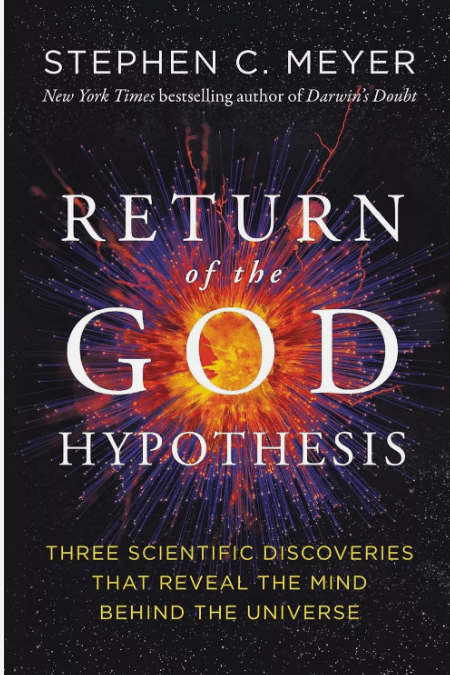
But since my presentation a decade ago, I think Steven Meyer’s book is the best best source to address this issue. I wrote a brief intro to it here:
https://globaltruthinternational.com/2025/07/21/the-return-of-the-god-hypothesis/

My original presentation:
https://circumcisedheart.info/DoesGodExist.pdf

Amazing Grace – a Podcast

I have started using Google’s NotepadLM AI product to create Podcast discussions of my theology articles. The only issue I have had so far is that the AI doesn’t know how to pronounce Hebrew (the words ‘chen’ & ‘chesed’ specifically).

I loved the 20 minute Podcast version of my ‘Amazing Grace’ article, but then I am a little biased!

https://drive.google.com/…/1z3u9mG4KKWZipaDH69o…/view…

Google’s NotepadLM also created a short 7 min video:

Amazing Grace though I think the Podcast is much better.

The Return of the God Hypothesis

The Return of the God Hypothesis

I wrote this 3 years ago and was reminded of it today:
Stephen Meyer’s third book, ‘The Return of the God Hypothesis: Three Scientific Discoveries That Reveal the Mind Behind the Universe ‘ is most impressive!

View at https://returnofthegodhypothesis.com/

His other 2 main books, ‘Signature in the Cell’ and ‘Darwin’s Doubt’ were absolute classics that give abundant support for the scientific paradigm of Intelligent Design (ID).

I have a whole section on my main website, circumcisedheart.info on ID.

Some of the historical facts that he introduces have really surprised and delighted me. Having spent many years at University studying Physics, and even reading some biographies on Physicists like Einstein I still found some of his insights really illuminating. I am also dismayed and a little disappointed with myself to learn that there were certain great questions of Physics that I don’t ever remember asking, such as how gravity actually works!

I learned all the laws of Universal Gravitation, etc., and could apply them as needed, but I don’t remember asking some of the deeper questions. 

In learning Physics and doing research in areas of Physics (for me it was mainly Electronics, Microwave Theory and Atmospheric Physics) I didn’t really need to know much of the history of Physics beyond what I learned in a few years of Physics classes at High School but Meyer has specialized in the history of Science, so he brings a wealth of great insights and historical narratives. 

A couple that have really struck me:
I knew a fair bit about Isaac Newton and the fact that he spent more time on his theological studies than his scientific research (if the church and government had known of some of his doctrinal positions they would have dumped him in prison, such as his rejection of the Trinity). And I knew his mathematical model of Universal Gravitation was a massive advance at the time.

But I was not aware that it had led him to argue for an infinite Universe (to balance the gravitational forces of the stars, etc.). This position was problematic for him from a theistic perspective.

Almost three hundred years later, Albert Einstein introduces his General and Special Relativity theories and turns the world of Physics on its head. But as he understood his own theories at the time, and as he rejected the idea of a Creation of the Universe from nothing (i.e the Genesis story), he had to introduce a special ‘fudge factor’, his cosmological constant to try to argue for a steady state Universe that had existed eternally. While the evidence mounted against his cosmological constant for years, it took him close to 20 years to finally overcome his own ego and accept he was wrong!

This from one of the greatest minds in all human history!

If an intellect as great as Einstein can so struggle to place facts and logic ahead of his own pet pre-suppositions and biases, how hard must it be for the rest of us!!

I am firmly convinced that this book should be read be all who wish to reject atheism and the evils that it engenders. This book should also be required reading in Senior High School Science classes.

In Meyer’s ‘Return of the God Hypothesis’ he argues that Theism provides a better explanation of how the first cell was created along with subsequent innovations in the history of life.

He states that “there are 3 keys facts about biological and cosmological origins:

  1. the material universe had a beginning
  2. the material universe has been finely tuned for life from the beginning, and
  3. large discontinuous increases in functionally specified information has entered the biosphere since the beginning.

Deism can explain the first two of these facts, but Theism can explain all three.”

Science today is increasingly finding supporting evidence for Theism and for a Creation event as described in the Bible. The worm has turned! Science truly supports a Creation event ‘ex-nihilo’   (creation out of nothing).

For more on Intelligent Design go to ID @ Circumcised Heart

I also refer to Meyer’s Darwin’s Doubt in this blog post about abductive reasoning:
https://luke443.blogspot.com/2018/01/understanding-abductive-reasoning-and.html

To Climb The Mountain

Rabbi Ari Khan has written an excellent article on last week’s Torah Portion (Shelach – Numbers 13-15)

To start with he argues that:

“Of all the sins which the children of Israel perpetrated in the desert, the one with the most far-reaching consequences was the sin of the spies. While other offences generated a local’ concentrated response, in the case of the spies, while the perpetrators perished, the entire nation suffered for the next 40 years by being forced to languish in the desert.”

So why was this sin so great? What did they do that was so wrong. Very simply, they failed to appreciate what the purpose of their mission was and hence they totally failed to trust God and rely on Him and His deliverance. This sounds harsh. Surely they did not break any commandments or did they?

The core commandment, the most foundational instruction in the whole Bible is the Shema, and that is a recognition of the God of Israel and a call to love Him with your all. All your heart, strength, mind and soul. To do so is to trust Him. To fail to trust Him; to see this mission in critical terms; to only see the challenges and barriers; the giant enemies that occupied the Land, was to reject this commandment and trust. [But from our comfortable existence today, it still seems very harsh! Sometimes the lessons were need to teach our children require consequences that can seem very harsh as well.]

Moses did not send these great leaders of the 12 Tribes as spies, but rather he sent them on a spiritual journey to ascend the mountain of their homeland, to ascend to Hebron where the great Patriarch Abraham had purchased the first portion of the Land. The Land of Promise. These great leaders were supposed to fall in love with the Land.

According to Rabbi Khan, the Talmud contains a most sensible ruling that a man should not marry without first meeting his wife to be (arranged marriages were very common). So likewise here, Rabbi Khan argues that Moses is offering these representatives of the 12 Tribes an opportunity to tour the Land, to see it, to embrace it and to share a love of the Land with the people of their tribes. If they had done this, they could have entered the Land without conflict as the Almighty would have opened all the doors for them and removed their enemies before them.

The Almighty was with them, but they rejected His providence and instead only saw impossible odds. Once the people recognized their error they even reacted with bravado and said they would enter the Land and fight off their enemies, but Moses informed them that the Almighty would not now be with them and so they would fail.

This is a most salutary lesson for all of us.

We are to seek the direction of God; we are to trust Him even when the odds seem insurmountable. He will protect us and deliver us (often at the 11th Hour), if we heed the Shema and place our full trust in Him. But if instead we act on our own initiative, yet against His will we are most likely to fail.

Clearly, we need to learn to hear His Will, to heed His Instructions, His Torah. And to trust. True faith is trusting Him.

I highly recommend this great article by Rabbi Khan for the insight it provides – https://aish.com/48944726/

The 5th Word: Honour your parents!

The ‘Ten Commandments’ (or 10 Words) contain enormous truth and the deepest wisdom.

They were referred to many times by both Yeshua and the Apostle Paul as the bedrock of true faith; and they are summarized in what Yeshua declared the two greatest commandments as well as when the Apostle Paul quotes Leviticus 19:18 and states that:  “For the whole Torah is fulfilled in one word: You shall love your neighbour as yourself.”  – Gal 5:14.

Recognition and acknowledgment of these 10 Words as the Moral Code of the Universe is vital to our well-being. So what about the 5th Word?

Honour your parents!

“Honour your father and your mother, that your days may be long in the land that the Lord your God is giving you.” – Exodus 20:12 (ESV)

The only one of the Ten Words that contains a promise, a promise of a longer and better life, and also a promise to Israel that they would possess the Land of Israel for a much longer time-frame.

This Instruction being part of the 1st Tablet is first and foremost about God. The 1st tablet gives us 5 Words, 5 Instructions about how we are to relate to the Almighty and the 2nd Tablet gives us 5 Words/Instructions on relating to our fellow man.

Yet the 5th Word is also a bridge to the 2nd Tablet as it introduces us into life via our generation as children of our parents.

We are called to honour our parents:

  • to show deference to them;
  • to remember the sacrifice they made in raising us up;
  • not to shame them or belittle them,
  • not to neglect them or their memory.

And in doing so we can expect  or at least have some hope  that the same honour will be shown to us by our children, and even in this way alone it may prolong our life and length or broaden its impact.

This Instruction may seem very easy to heed if you have been blessed to have great parents (though no-one is perfect).

Yet even here, you may take them for granted or perhaps not even have the insight to recognize how blessed your upbringing has been. And then, if you were to, in some way abuse them, it would seem such abuse would cut even deeper.

If your parent(s) considers that they have generally made a good effort of raising you and you reject them in some way such as through expressing disgust or dissatisfaction in an offensive manner, even to the point of not wishing to be associated with them anymore, then clearly such parents would be extremely offended.

On the other side of the coin, as adult children, we need to give our parents a fair bit of slack. This is I think part of what honouring them entails. It can mean seeing them with ‘rose coloured’ glasses to some degree; being more tolerant of this short-comings at least as they relate to us, their children. Honouring and respecting perfection is easy; honouring and respecting flawed individuals not so much.

On a personal note, my Dad was an awesome Dad, yet when I got much older I noticed that he seemed to use me a little as a ‘punching bag’ (in a non-physical manner) when angry due to some incident and, especially it seemed, if my Mum had caused him some grief. He seemed to have so much respect for her (and perhaps a little fear of getting on her bad side!) that he looked for something or someone to take his anger or frustration out on and I felt this fell to me much more than anyone else, including my siblings. Some in the family felt it was because I was the most like him and this may have been true (though I deny it!).

My wife also thought this! Regardless, while it upset me, to the best of my recollection I never reciprocated in any way but just sucked it up. I think my great love and respect for this amazing man overrode any desire to ‘return fire’. So, I do believe I have for the most part really lived up to the 5th Word and to this day my love and respect for my late father and for my Mum remains extremely strong and deep.

But we are not commanded to love our parents, as love, though principally a commitment, is also much more and sometimes perhaps too much to expect if our parents have not lived up to all that God created them to be.

It is very hard to love parents who have abused you; or have never even been half-decent at the parenting role. But regardless, the Almighty does ask us to honour them. Our parents represented the our Father in Heaven to us as we grew up – they were His representatives in our young lives; they were like gods to us.

So, when we reach adulthood and honour our parents, we are in turn honouring the Almighty. This last point may not be obvious. The 10 Words were given to adults, for adults to heed. They were not given to children. Under Jewish jurisprudence over many centuries, children only reach an age of accountability at 13 years, so until then these Instructions are only of secondary importance to them.

But when adult children abuse their parents in some way whether through insults, shaming them or even physical or financial abuse, it is really a rejection by these adult children of the Almighty Himself. Clearly it brings great hurt to the parent(s), and the emotional pain may be much longer lasting than any physical pain, but I wonder how much more it grieves our Father in Heaven?

The 5th Word is one that really is in play for almost all adults (even once you parents have passed away, you still need to honour them memory and not bring shame to their good names). So I think we would all do well to reflect on this Word/Instruction on a regular basis and look to right any wrongs we may have committed in this regard in recent memory.

Shavuot/Pentecost and the Torah

Shavuot, also called the Festival of Weeks, is at the centre of the three main Biblical Feasts periods. Shavuot is to be celebrated 7 weeks + 1, that is 50 days after the Sabbath of Pesach (Passover). While it appears clear from Scripture that these 50 days are to start on the Sunday, the first day after the regular weekly Sabbath that falls during the Feast of Unleavened Bread/Passover, most of Judaism (the Karaites are an exception) counts from the day after Passover/Pesach, that is from the 15th Nisan.

Personally, I have tended to celebrate with Israel for the sake of unity.

While it would also appear that the 2 Tablets (the 10 Words)  were not actually given to Israel on this day, nonetheless Israel celebrates the giving of the 10 Words on this day or at the very least the preparedness of Israel to accept the Torah.

Rabbi Moshe Kempinski argues that:
“… the festival of Shavout represents not the giving of the Torah, but rather the Jewish people’s resolve to stand at the foot of the mountain to receive the Torah. That decision to stand and enter into a covenant of obedience to G-d’s direction marks the power of that day. Shavuot represents the wedding of the Jewish people to their Creator. G-d is seen as the groom beckoning His bride, the people of Israel, to stand under His cloud-huppah covering and to accept His marriage contract (ketubah), His Torah. The joy of this festival is that this people agreed to enter the huppah.”

This take seems to me to be in good harmony with the events of Shavuot as described in Acts 2, as this incredible outpouring of power and spirit on some 3000 zealous Jews from around the world resulted in these people taking the message, joy and goal of Torah[1] to the entire world (even though the message has been seriously distorted and disturbed over the centuries since).

We read in Acts 2 that the followers of Yeshua waited for Shavuot in Jerusalem, after Yeshua had ascended some 10 days before. They waited and then received great power from HaShem which was witnessed by thousands and which resulted in some three thousand becoming followers of Yeshua and believing his message that very day.

In Numbers we read:

“Then the LORD said to Moses, Gather for me seventy men of the elders of Israel, whom you know to be the elders of the people and officers over them, and bring them to the tent of meeting, and let them take their stand there with you.

And I will come down and talk with you there. And I will take some of the Spirit that is on you and put it on them, and they shall bear the burden of the people with you, so that you may not bear it yourself alone.” – Numbers 11:16-17

Note here that God’s Spirit, His Power ‘emanated’ from Moses to these followers, these elders who loved HaShem and were obedient to Moses. Thus, Moses no longer bore the burden alone, but even more importantly, the light of Torah and the power to proclaim it was now in the hands of many more so that the truth of the Almighty could be shared with a great many more and begin to emanate throughout the whole people of Israel gathered in the desert.

Fast forward to the miracle of Shavuot/Pentecost in Acts 2, and we see a very similar event, where just as Yeshua had predicted his proclamation of the Gospel and Torah was now able to emanate into the world through his followers, these ‘elders’ of The Way, who would now have the Power of the Almighty to enable them to proclaim Yeshua’s message, which was of course the message of the Almighty, just as Moses had been told when HaShem declared that He would sent a prophet who would speak His Words.

Deut 18:18-19

“I will raise up for them a prophet like you from among their brothers. And I will put my words in his mouth, and he shall speak to them all that I command him. And whoever will not listen to my words that he shall speak in my name, I myself will require it of him.”

In Jerusalem for Shavuot at that time were very many zealous believers from the Diaspora, who saw this great outpouring of the Spirit of God. In returning home, the message of the Kingdom, the message of Yeshua was thus powerfully magnified and ‘emanated’ throughout the world so that Yeshua and his followers could truly be a ‘Light to the Nations’, that is, a revealer of Torah, of The Way (Ps 119) and of the Good News of the Kingdom (Luke 4:43).

There are also some interesting parallels when we investigate the chiastic structure of the 10 Words and also a summary of a midrashic commentary on the delegation/emanation of Numbers 11:16-17 (quoted  above).

The Ten Words are ordered in a triple chiastic structure:

Chiastic structure is a literary structure used in ancient literature including the Bible.

For example, suppose that the first topic in a text is labeled by A, the second topic is labeled by B and the third topic is labeled by C. If the topics in the text appear in the order ABC…CBA so that the first concept that comes up is also the last, the second is the second to last, and so on, the text is said to have a chiastic structure. [Also, a chiastic structure can be of the form ABBAABB…ABBA. i.e. when only 2 ideas are being repeatedly referenced rather than 3 or more].

So to help visualize this we write it in this indented manner:

                  A
                     B
                        C
                      C’
                  B’
                A’

There is normally an inverted parallelism in the sequence.

For example, Matthew 7:6 contains a simple chiastic structure:

A  “Do not give what is holy to dogs,

                B  and do not throw your pearls before swine,

                B’ lest they trample them under their feet,

A’  and turn and tear you to pieces”

In this instance, the propositions A and B are reflected as in a reversed mirror image by the propositions B’ and A’.

This helps us understand this verse better as we can see that the dogs (A) tear to pieces (A’), and the swine (B) do the trampling (B’).

A very good example of formal chiasmus may be found in Genesis 17:1-25:

A   Abram’s age (1a) 

           B  The LORD appears to Abram (1b)        

                       C  God’s first speech (1b-2)           

                                           D  Abram falls on his face (3)               

E  God’s second speech – Abram’s name changed (4-8)                  

  X  God’s Third Speech -the covenant of circumcision; (9-14)                     

                                                         E’ God’s fourth speech – Sari’s name changed (15- 16)                                                  

                                             D’  Abraham falls on his face (17-18)      

        C’  God’s fifth speech (19-21) 

           B’  God “goes up” from Abraham (22)

A’  Abraham’s age (24-25)

[See http://www.inthebeginning.org/chiasmus/introduction/chiasmus_intro.htm]

The ordering of the Ten Words can be seen to have a chiastic structure when placed into one of three categories of:
– emotion,  speech, and action

The first two commandments, 1) Belief in God and 2) Not worshipping other gods, both have to do with what is in our hearts, what we feel to be true.

We are then told not to take God’s name in vain; this is clearly speech. The fourth Word, ‘Keeping the Sabbath’ is all about action, as is the fifth, as ‘honouring our parents’ is all about how we act toward them.

Beginning with the top of the second tablet (the 2nd 5 Words) we have: Murder, Adultery, and Stealing which are all ‘action’ sins. The 9th Word, ‘Bearing false witness against your neighbour’ is a transgression through speech. The final commandment, coveting that which belongs to your neighbour, is contained within one’s heart, one’s emotions.

Thus we can see that the Ten Words; the Ten Commandments follow the chiastic structure of  AABCC – CCCBA.

AA

                  B

                                    CC

                                    C’C’C’

                  B’

A’

This order and categorization also helps us appreciate which are more difficult as it is always hardest to control the heart[2]. The above is mostly paraphrased from an article by Stacey Goldman.

Her conclusion is also well worth contemplation:

“Through this literary analysis, we discover a very deep lesson from the Torah. When it comes to our relationship with G‑d, we need to work on our belief so that we can control our speech which will help to refine our actions. This will then further control our actions towards other people which will help to control our speech and refine our thoughts and beliefs about ourselves. This is what it is all about. We cannot respect and treat one another properly unless we respect and care about ourselves, and we can only truly care about ourselves when we recognize that we were created for a reason and that we need to have a relationship with our Creator.”

In Leviticus 19:18 we read ‘Love your neighbour as yourself’. This is surely the greatest principle of the Torah. God is involved in the human-to-human relationships. He is manifest when neighbours and friends get along, when people treat one another with mutual respect and caring. The “greatest principle of the Torah”, then, must be read as a rejoinder to behave towards one another in a manner that brings God into our personal and collective lives. This is the path to holiness; indeed, loving your neighbour as yourself becomes the epitome of holiness.

And the inclusion of God in this ‘greatest principle’ is evident when we read the conclusion of verse 18 where we read  “I am God”.

“… but you shall love your neighbour as yourself: I am God.” – Lev 19:18b

God is part of the equation. Loving your neighbour is a summation of the 2nd Tablet. And when it is done in the ‘fear of God’ it sums up the whole of Torah as the Apostle Paul stated: “For the whole of the Torah is summed up in this one sentence: “Love your neighbour as yourself” – Gal 5:14

Thus the holiness of man is connected to keeping the commandments – specifically, the Ten Commandments, the “essentials of Torah.” And the Almighty provides the strength and power to heed this call and be holy.

Yeshua had told his disciples that they would receive the power of the holy Spirit and to wait for this event. As it was only 10 days until Shavuot in seems likely that they would remain in Jerusalem until then.

“But you will receive power when the Ruach HaKodesh comes upon you; you will be my witnesses both in Yerushalayim and in all Y’hudah and Shomron, indeed to the ends of the earth!” – Yeshua in Acts 1:8

What this incredible event seems to illustrate is the delegation of the Gospel message to a much greater number of people from all lands of the Diaspora. It seems then to match the events we read in Numbers as below:

Numbers 11:16-17 and Delegation

“If the burden is too heavy for you to bear alone, says G-d to Moses, “Gather to Me seventy men of the elders of Israel, whom you know to be the elders of the people, and officers over them; and bring them to the Tent of Meeting, that they may stand there with you.”

And I will come down and talk with you there. And I will emanate of the spirit which is upon you, and will bestow it upon them; and they shall bear the burden of the people with you, that you bear it not yourself alone.

On the most basic level, this is the difference between physical and spiritual giving. In physical giving, the givers resources are depleted by his gift–he now has less money or energy than before. In spiritual giving, however, there is no loss. When a person teaches his fellow, his own knowledge is not diminished if anything, it is enhanced.

Upon deeper contemplation, however, it would seem that spiritual giving, too, carries a “price.” If the disciple is of inferior knowledge and mental capability than the teacher, the time and effort expended in teaching him is invariably at the expense of the teachers own intellectual development; also, the need for the teacher to “coarsen” and simplify his ideas to fit the disciples mind will ultimately detract from the depth and abstraction of his own thoughts. By the same token, dealing with people of lower moral and spiritual level than oneself cannot but affect one’s own spiritual state. The recipients of this “spiritual charity” will be elevated by it, but its giver will be diminished by the relationship, however subtly.

Indeed, we find an example of such spiritual descent in Moses bestowal of the leadership upon Joshua. In contrast to the appointment of the seventy elders, where he was told to “emanate” his spirit to them, Moses is here commanded to “Take Joshua the son of Nun, and lay your hand upon him… and give of your glory upon him” (Numbers 28:18-20). Here the Midrash comments, “Lay your hand upon him like one who kindles a candle from a candle; Give of your glory like one who pours from one vessel into another vessel.”

In other words, there are two kinds of spiritual gifts: a gift that “costs” the giver nothing (“emanation”, which is like “kindling a candle from a candle”), and a gift that involves a removal of something from the giver in order that the recipient should receive something (“pouring from one vessel into another”).

There are times we indeed sacrifice something of ourselves for the benefit of a fellow. But there are also times when we commit ourselves to our fellow so absolutely–when the gift comes from a place so deep and so true within us–that we only grow from experience, no matter how much we give of ourselves.”

 – by The Lubavitcher Rebbe (seehttp://www.chabad.org/therebbe/article_cdo/aid/1088/jewish/The-Emissaries.htm for a fascinating article on the Rebbe which also relates to the ‘outpouring’ or ‘emanation’.

In the case of the Shavuot experience of Acts 2 the spiritual gift was really from the Almighty who can’t in anyway be diminished.

May you experience something of the joy and power of being filled with the Spirit of the Almighty this Shavuot and may the joy of Torah be yours as well and bring you into a deeper holiness.


[1] http://circumcisedheart.info/The%20Goal%20of%20Messiah.pdf

[2] see http://www.chabad.org/library/article_cdo/aid/521897/jewish/The-Meaning-in-the-Order.htm