Vayechi: We are, at best, co-authors of our lives

This week’s Torah Portion Vayechi (Genesis 47:28-50:26) contains a great message for all of us at this momentous time in history. Yosef (Joseph) states to his brothers who had rejected and betrayed him, “You intended to harm me, but God intended it for good.”

The situation that led Yosef to be in such an exalted position and able to save his family from a disastrous famine could not have been seen by anyone. The Almighty was working through it all despite appearances to the contrary such as the very long two years that Yosef spent in jail after accurately foretelling the dreams of the chief baker and chief cup bearer:  “Only remember me, when it is well with you, and please do me the kindness to mention me to Pharaoh, and so get me out of this house.”  – see my article https://globaltruthinternational.com/2020/12/16/do-not-despair-waiting-on-the-lord/

Yosef came to see the work of Divine Providence in all of this as he declared to his brothers “It was not you who sent me here, but God.”. It appears that Yosef understood the powerful hand of Yehovah in everyone’s lives and that therefore there is a sense in which we are no more than co-authors of our lives.

If we can grasp such a perspective it should engender in us a much greater trust in God. It should help us to survive events that can bring despair and even resentment, and help us maintain the energy and enthusiasm to continue to walk faithfully before Yehovah as we also continue to act justly and love grace  – https://globaltruthinternational.com/2015/04/02/love-loving-kindness-micah-68/.

I also think that reflecting on the dramatic turn of events that occurred in the life of Yosef from his childhood to becoming second in authority to the Pharoah of Egypt should also open our minds and hearts to re-evaluating what we think we know and have been taught.

One example that has come back into my purview is the analogy of the wineskins. When, as an adult I come dramatically face to face with the reality of life of Yeshua ben Yosef and its incredible implications for the future of mankind, I was fairly naturally I think, indoctrinated into many common Hellenistic Christian misconceptions. The concept of Christianity being the new (and better) ‘wineskin’ and Christians being the better ‘wine’ was very much one of them.

So to study and learn that Yeshua stated that it is the old wine, not the new wine in new wineskins that is better was a dramatic discovery and new perspective!

I have written on this in a number of articles and books – please see below for a short excerpt.

I mainly want to emphasis here though that we really need to first TRUST God and secondly, as we act with trust or faithfulness towards Him, we need to always be open to new perspectives that if nothing else, can help strengthen that trust and deepen our faith as it deepens and solidifies our knowledge of Yehovah and his Messiah ben Yosef, Yeshua.

And also then, as we look at the dramatic and worldwide events that have made 2020 a year like no other in recent memory, we should try to trust Yehovah and know that He is at work through all this and He will find a Way where there seems to be no way. We need to hold onto to Him as we continue to stand for truth and justice and against the increasing tyranny of most of those in leadership over us.

“I am doing something new; it’s springing up — can’t you see it?
I am making a road in the desert, rivers in the wasteland.
” = Isaiah 43:19

The New Wine (an excerpt from ‘Doctrinal Pitfalls of Hellenism’):

The long history of Replacement Theology in the church and the almost unthinking acceptance of its veracity has lead many to uncritically accept arguments that assume such veracity even if the person presenting the argument might otherwise explicitly reject many of the implications of Replacement Theology. Here is a very good example of this. I had been debating an article published by the Christian scholar, David Maas. As part of the exchange of viewpoints he wrote an email, which included this quote:

“Jesus warned against pouring new wine into old wine-skins.  Attempts to domesticate the Christ of scripture by pouring the new wine of the Spirit into the old wine-skins of Second Temple Judaism are doomed to fail.  If they do not burst the old skins the sweet wine of the Spirit will be turned into the vinegar of the death-dealing letter of the Law (2 Corinthians 3:6).” – David Maas, (from email correspondence on Oct 15, 2011).

I was of course familiar with the ‘wineskins’ analogy that Yeshua had used, but here for the first time I critically examined the common consensus that I had shared, perhaps only because it had been used to reach a conclusion I rejected. Here is part of my response at the time:

When I read this statement, it struck me very forcefully, how emphatically this ‘wineskins’ statement of Yeshua was been used to support a very strong doctrine of ‘Replacement’. That is, that the church has replaced Israel in God’s affections and plans.

David Maas is very clear here in equating the Jewish religion of Yeshua’s day (what he terms ‘Second Temple Judaism’) that adhered to the Hebrew Scriptures (The Tanakh), with the ‘old wineskin’, and Christianity as the ‘sweet (new) wine of the Spirit’. Here he also very clearly equates this so-called ‘Old Covenant’ (Second Temple Judaism) with the ‘letter of the Law’ and the so-called ‘New Covenant’ of Christianity with the ‘Spirit of the Law’.

This ‘Replacement Theology’ whether intention or not (surely most ‘Christians’ who support it are not intentionally anti-Israel and against the Jewishness of Yeshua), has resulted in a great deal of anti-Semitism which has ultimately led to great persecutions and pogroms against the Jewish people.

In fact, it could be argued that the miss-understanding of this parable has been instrumental in much evil (‘bad fruit’) against the Jewish people and helps explain why when Jewish lovers of the Almighty look at the ‘fruit of the tree’ of Christianity, they do not see ‘good fruit’ but bad, and consequently reject the messenger because of the falsehood of the message. In this vein you may wish to revisit Matthew 7:16-20, Luke 13:6-9 and then John 15:2-16.

In seeking commentary where this parable was first used to argue that the church had replaced Israel and Judaism, I found that it appears to have been first proposed by the seriously anti-Semitic Marcion (85 – 160 CE) in his ultimately successful efforts to separate Christianity from Judaism.

So, thanks to Mr. Maas comment, which I found very disturbing, I was interested in returning to and reconsidering this parable.

Thanks to the incredible work of the late David Flusser (Hebrew University, Jerusalem) and the Jerusalem School of Synoptic Research, I now understood that the Gospel of Luke was most likely written before the Gospels of Mark and Matthew, and these well before John’s gospel.

Therefore it seemed sensible to start in Luke (Luke 5:36-39):

“He also told them a parable: “No one tears a piece from a new garment and sews it on an old garment; otherwise the new will be torn, and the piece from the new will not match the old. And no one puts new wine into old wineskins; otherwise the new wine will burst the skins and will be spilled, and the skins will be destroyed. But the new wine must be out into fresh wineskins. And no one after drinking old wine desire new wine, but says ‘The old is good’.” (Some manuscripts, such as the KJV have ‘The old is better’) – The Jewish Annotated New Testament

I had read and listened to this scripture a great many times and even heard preachers speak on it but I had amazingly missed the last sentence where Yeshua said the old wine is better! You may need to do a double take yourself here. Yeshua states that it is the old wine, not the new wine in new wineskins that is better!

It is also perhaps worth noting some different ways verse 39 is translated into English:
“ … And no one who has ever tasted fine aged wine prefers unaged wine.” – The Message

“Of course, nobody who has been drinking old wine will want the new at once. He is sure to say, ‘The old is a good sound wine.’” – JB Philips

“And no one, after drinking old wine wishes for new; for he says, ‘The old is good enough.’” – NASB

I am not sure though that these translations bring anything new or more helpful to the simple comment that the ‘old wine is better’.

When we turn to the two references to this same parable in Mark (2:22) and in Matthew (9:17) we find this last sentence missing. Without this concluding sentence it is much easier to interpret this parable as Marcion and David Maas have. Perhaps this part of the parable was excluded from the Gospels of Matthew and Mark deliberately by copyists or translators, for this very reason.

It should not take much reflection then, to see that this parable can in no way be suggesting that the ‘sweet (new) wine’ of Christianity is somehow superior to the old wine of Judaism. If these were the two concepts and approaches being compared, it would mean that Yeshua was saying that Judaism was better!

So now, we need I think to ask, is this what the parable is suggesting or is it something a little more subtle?

The late Dr Robert L Lindsey (a Baptist Pastor and student of Prof. Flusser) argues most convincingly in his book ‘Jesus, Rabbi and Lord’ (see Chapter 19) that all throughout the Gospel of Luke the structure of each narrative is three fold:

1) An incident in Yeshua’s life is related;

2) this is followed by a teaching discourse by Yeshua; and

3) which then concludes with 2 parables.

Consider how this ‘wineskins’ parable fits with this approach. We see in Luke 5:27, that the tax collector (Matthew Levi the possible author of the Gospel of Matthew or at least the original Hebrew ‘History of Yeshua’) has prepared a great feast for Yeshua. A number of the Pharisees and scribes question Yeshua about spending time with these ‘sinners’ (the tax collectors had chosen their unrighteous occupation which meant they had chosen to separate themselves from community welfare and fellowship with their ‘healthy’ or righteous brethren).

Yeshua then makes the classic statement, or teaching, that the healthy do not need a doctor. He was saying here, as he had elsewhere, they he had come to call the unrighteous, the ‘lost sheep of Israel’ back to the Covenantal relationship that the family of Israel had with their Father, the Almighty.

It is in this context that he gives the two parables; the parable about sewing a piece of new clothe onto an old garment and the wineskins parable. In this context, I would argue that the ‘old wine is better’ refers to those of Israel who have been, and remain in, communion with the God of Israel. That is the healthy sheep of Israel that are not lost (the mainstream Jewish ‘man in the street’ represented in the religious context by the Pharisees – Yeshua himself being essentially a Pharisee[1].

They are ‘better’ or ‘good enough’ because they have a developed intimacy with the Almighty, which the Jewish tax collectors and other sinners, through no longer walking right with God (‘halacha’), have turned their backs on.

In calling these ‘sinners’ back to the Father, Yeshua sees them as like new wine needing a different treatment and approach (new wineskin), which he offers.

The same can surely be said when many years later, Gentiles would be accepted into the Kingdom of God, the movement of Yeshua. They would also need a ‘new’ or different approach, as they would not have grown up with the ‘oracles of God’, with anything like the knowledge of the Tanakh and mitzvot (commandments) that the Jewish people have from birth.

This ‘new wineskin’ essentially encompasses the Ten Commandments plus the four Noahide Laws as detailed in Acts 15. I have dealt in a little detail with the edicts of the Jerusalem Council (Acts 15) in my article ‘Circumcision – A Step of Obedience?’.

This parable[2] has nothing to do with a comparison between living under the ‘letter of Torah (Law)’ or the ‘Spirit of Torah’[3].

So, the conclusion presented by David Maas, with its strong ‘Replacement Theology’ pre-suppositions, was based on a faulty reading of this analogy or parable. Once again we see that this (Hellenistic) doctrine is invalidated on closer inspection of the relevant Scriptures.

[1] See ‘Jesus’ by Flusser, or the discussion of this point in my ‘The Times of Yeshua’ article @ circumcisedheart.info.

[2] For a much more in-depth look at the ‘wineskins’ parable I highly recommend ‘The Old is Better: Parables of Patched Garment and Wineskins as Elaboration of a Chreia in Luke 5:33-39 about Feasting with Jesus.’ By Anders Eriksson – http://www.ars-rhetorica.net/Queen/VolumeSpecialIssue2/Articles/Eriksson.pdf

[3] I have dealt with this issue elsewhere. See for example, ‘Siblings of the King: Living in the Will of the Father’.  The well-known scholar James DG Dunn also discusses these very commonly misunderstood phrases in ‘The Theology of Paul the Apostle’.

Yehovah Yoshiah

I listened to an interesting talk by Michael Rood with Nehemia Gordon recently where they discussed an interesting verse in George Howard’s (the late Professor of Religion at the University of Georgia) ‘Hebrew Gospel of Matthew’.

The verse in question is Matt 28:9 where the women, who have gone to the tomb of Yeshua after the crucifixion and burial, met Yeshua and he greets them.Most manuscripts have something like: “But Jesus met them, saying, “Greetings!” They came to him, held on to his feet and worshiped him.”.

Obviously, he didn’t use the actual English word we use today of ‘greetings’ and many translations have something like ‘All hail’ (according to Nehemia) which would be very Greek.

The CJB has ‘Shalom …’ which would certainly be more likely.But this Hebrew version of Howard’s is very different.

This version is based on the Shem Tov’s ‘Evan Bohan’ of the 14th century and which Howard and Gordon, et al, are convinced is not based on any Greek or Latin versions that pre-date it but some earlier Hebrew version(s). There are now at least 28 distinct Hebrew versions that have been discovered in recent years.

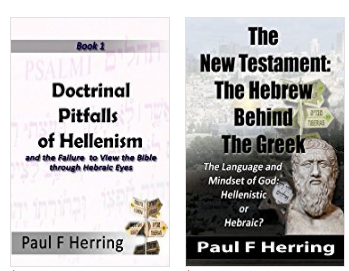
I argue in my book ‘The New Testament: The Hebrew Behind the Greek’ that this gospel was in fact originally written in Hebrew as well. See: https://www.amazon.com/New-Testament…/dp/B009XO0NQU/

Here in the Hebrew Gospel of Matthew we read:
‘As they were going Yeshua passed before them saying: May the Name deliver you. They came near to him, bowed down to him, and worshipped him.’ (this is Howard’s English translation).

Howard’s and Shem Tov’s Hebrew has השם (HaShem) which means ‘The Name’.

By around the 6th century Jewish scholars and Rabbi’s were no longer quoting and speaking the tetragrammaton (i.e. Yehovah) out of reverence for it and great fear of mis-using it and had replaced it typically with either Adonai or HaShem.

So, we can be fairly sure (as there is no evidence of this practice in the first century CE) that the original version has the tetragrammaton (that is Yehovah).

Thus it appears Yeshua’s first two words after his resurrection were ‘Yehovah Yosiah’ (that is, God saves or God will save or deliver you).

Think about it, the first man to be so faithful and obedient to the Almighty to the very point of giving his life comes back to life to proclaim ‘God does indeed save you’!

Follow Yeshua in trusting and being obedient to the Almighty (i.e. be one of his brothers or sisters – those who do the will of the Father – Mark 3:35) and you to will be resurrected!

Makes sense to me and it is such a powerful statement in such a context!!

Do Not Despair – Waiting On The Lord

“After two whole years, Pharaoh dreamed that he was standing by the Nile, …” Gen 41:1

Genesis 40:9-23:
“9 So the chief cupbearer told his dream to Joseph and said to him, “In my dream there was a vine before me, 
10 and on the vine there were three branches. As soon as it budded, its blossoms shot forth, and the clusters ripened into grapes. 
11 Pharaoh’s cup was in my hand, and I took the grapes and pressed them into Pharaoh’s cup and placed the cup in Pharaoh’s hand.” 
12 Then Joseph said to him, “This is its interpretation: the three branches are three days. 
13 In three days Pharaoh will lift up your head and restore you to your office, and you shall place Pharaoh’s cup in his hand as formerly, when you were his cupbearer. 
14 Only remember me, when it is well with you, and please do me the kindness to mention me to Pharaoh, and so get me out of this house. 15 For I was indeed stolen out of the land of the Hebrews, and here also I have done nothing that they should put me into the pit.”…
20 On the third day, which was Pharaoh’s birthday, he made a feast for all his servants and lifted up the head of the chief cupbearer and the head of the chief baker among his servants. 
21 He restored the chief cupbearer to his position, and he placed the cup in Pharaoh’s hand. 
22 But he hanged the chief baker, as Joseph had interpreted to them. 
23 Yet the chief cupbearer did not remember Joseph, but forgot him.
Gen 41:1 “After two whole years, Pharaoh dreamed that he was standing by the Nile, …”

Last week’s Torah Portion is in my opinion one of the most significant as it carries so many foundation messages of hope, especially in terms of the coming of Messiah and the redemption of humanity and restoration of the world. I touched on it here: https://globaltruthinternational.com/2012/12/06/from-joseph-through-judah-foretelling-messiah/

And this week’s Torah Portion, Mikeitz (Genesis 41:1-44:17) brings that hope to fruition while carrying a subtle, but very powerful message, bringing comfort in a time of potential despair.

It starts with the phrase ‘After (or at the end of) two whole years, …’.

Yosef/Joseph, is one of the best examples of a ‘type of Messiah’, that is a person whose life and example bears great similarity to the picture that the Bible paints of the eschatological Messiah or Messiahs (Messiah ben Yosef and Messiah ben David).

In these few words we see great import. Yosef had unjustly suffered and was ‘stuck’ in jail praying and hoping for release. His interpretations of the dreams of the chief baker and chief cup bearer had offered a way out – “Only remember me, when it is well with you, and please do me the kindness to mention me to Pharaoh, and so get me out of this house.”

Yet we see here that he had to wait two whole years!

Two whole years in jail, two years of possible despair, of wondering if Yehovah had heard his prayers and when He might answer them. Two whole years in jail, in suffering – plenty long enough to have given up, to despair of ever finding justice and being shown mercy.

Think of you own life – when have you had to wait for something you thought you needed NOW, some prayer that the Almighty would surely answer swiftly and bless you with His response. Yet you were left waiting, and perhaps are even still waiting and perhaps despairing as the pain or suffering is relentless and often seems overbearing and way beyond what you can possibly cope with?

Yosef, our great Messianic figure waited two whole years. Two whole years for one man may equate to two thousand years for all men.

As a primary school child I lived in the days before television. We went to the movie theatre in town most Saturday afternoons for the 2 pm movie. Before the main movie we would watch the next episode in some series. I most remember the Flash Gordon series (this was in the mid 60’s). The episode would almost always end with some high drama and seemingly impossible predicament for Flash Gordon, or the helpless victim that he was trying to save. With great anticipation we would wait all week to see how he would extricate himself or save the poor innocent victim. Though we had no reason to despair, we were at least learning of the need for patience and trust that it would all work out ok in the end.

Similarly, in the days before books and the printed Bible were common-place, the Jewish people would go to the synagogue or Temple every Shabbat and hear the reading of the Torah Portion (this practice dates back to before the time of Yeshua, so it is over 2,000 years old). Imagine some person or child hearing the Torah Portion for the first time. They heard how Yosef had interpreted the dreams and asked to be remembered to the Pharaoh so he might get out of the hell-hole that was jail. But the reading of the Torah Portion ended before they heard the end of the story and if indeed he was saved from jail, shown justice and mercy, and restored to his rightful place.

So this person or child now waits a whole week to hear the great news of Yosef’s ‘escape’ from jail and restoration. And when their week of wondering and excited anticipation is over, they like my childhood movie experience, learn of how Yosef is finally blessed by Yehovah and restored with great honour. But they may also hear the full import and meaning of ‘after two whole years’ – that is, that patience and trust is needed.

It is not in our time, but in God’s time. We need to do our part, but then when circumstances don’t seem to be working out how we think they should, we need to have faith in HaShem, we need to trust that He will act in His time and with His power to make right the wrongs; to ease the pain; to dispense justice and bring restoration and redemption.

Right now, you may feel you are in this place – somewhere in your ‘two whole years’ of waiting and possibly even despairing. This may be at a personal level, or a community or national level. You may see no way forward at this time.

Or it may be that you are looking at the world-wide or universal level in looking for the Great Day of the Coming of Messiah.

Either way, don’t lose hope, take solace from this biblical narrative of Yosef as you seek to see freedom from pain, or you seek justice or even more, to see Messiah ben Yosef. Look up, for your redemption draws near!  

Time to Answer the Call

Time to Answer the Call

Vayera (Genesis 18-22):

In this Torah Portion we read of Abraham pleading with Yehovah to spare the wicked city of Sodom.

Rabbi Sacks in an excellent article on this Torah Portion suggests that the key theme of history up until Abraham is a “failure of responsibility”.

He writes: “… Adam and Eve lack personal responsibility. Adam says, “It wasn’t me; it was the woman.” Eve says, “It wasn’t me, it was the serpent.” It is as if they deny being the authors of their own stories – as if they do not understand either freedom or the responsibility it entails.

Cain does not deny personal responsibility. He does not say, “It wasn’t me. It was Abel’s fault for provoking me.” Instead he denies moral responsibility: “Am I my brother’s keeper?”

Noah fails the test of collective responsibility. He is a man of virtue in an age of vice, but he makes no impact on his contemporaries. He saves his family (and the animals) but no one else. According to the plain reading of the text, he does not even try.”

Abraham on the other hand passes all these tests of his character. He displays personal responsibility, moral responsibility, and collective responsibility in relation to Sodom.

This lesson is so much for our time right now, this week and most especially if you live in the USA.

It’s one thing to take personal responsibility and even be morally responsible in how you live, but collective responsibility means being prepared to stand up against the crowd, against fear and intimidation and stand for the principles of Torah, for truth, for honesty and integrity and for justice.

Some years ago I wrote an article ‘Why is the Church Silent?’ which discussed the rights and wrongs of ‘rescuing’ (standing up for the unborn).

See http://circumcisedheart.info/Christian%20site/Where%20is%20the%20outcry%20-%20CETF%20Version%20Apr%2007.pdf

While this issue is still in my opinion more important than almost every other issue and seemingly much more important than who wins an election in a foreign country (speaking as an Australian), but there is a very strong sense that this is a watershed moment in history, not just the history of the USA, but world history, redemptive history.

There is no doubt that the current election counting for the President of the USA has been seriously corrupted  in at least 7 distinct ways by the Democrats and those in bed with them, and it seems likely that a Socialist Dictatorship is about to be inaugurated in the USA which will then become a puppet of the Communist Party of China.

As pointed out by a dear friend and kindred spirit from Texas, while the election decision this year will most likely involve the Courts and go all the way to the Supreme Court of the USA, it is not likely to change the fraudulent outcome, as he argues that the Courts really don’t wish to be caught up in political fights.

But before we turn off and lie down in submission to the will of the criminals behind this massive fraud, now seems the time to head the call to engage, to demonstrate as Abraham did, collective responsibility.

This can be done through prayer and protest, through social media activism, through supporting those on the frontlines in anyway you can.

But how many will heed the call. Sadly, it has been my experience as someone who has stood up and stood in front of the ‘murder mills’, that most find this a bridge too far.

Why? Because it costs. It costs in a way that taking personal responsibility rarely does. It can cost you your livelihood, your friends, even some in your family.

Whether or not it is Yehovah’s will that the country that is the leader of the free-world descends into a Socialist nightmare or not, it is very clear that all lovers of righteousness and Torah are called to be counted.

Rabbi Sacks also quotes the very powerful works of the poet John Donne, which have always been amongst my favourite call to arms:

“No man is an island,
Entire of itself …
Any man’s death diminishes me,
For I am involved in mankind.

Therefore, never send to know for whom the bells tolls, it tolls for thee’.

May all lover of Truth, of Torah, of Yeshua and Yehovah, answer the call and stand up and be counted at this momentus time.

Link to Rabbi Sacks article ‘Answering the Call’:     

https://www.aish.com/tp/i/sacks/Answering-the-Call.html

PS: Only a few hours after writing this I heard that Rabbi Sacks has passed away. (1948 -2020). May his memory be a blessing! Baruch Dayan Ha’Emet.

Delight Yourself In The LORD

“Delight yourself in the Lord, and he will give you the desires of your heart.” – Psalm 37:4

The current Torah Portion (Nitzavim-Vayelech) speaks to a number of vital foundational elements of our faith in Yehovah. In this short post I wish to address two of them.

First the practicality of Torah:  

Deut 30:10–‐ 14
10 “However, all this will happen only if you pay attention to what Yehovah your God says, so that you obey his commandments and regulations which are written in this book of the Torah, if you turn to Yehovah your God with all your heart and all your being.
11 For this commandment which I am giving you today is not too hard for you, it is not beyond your reach.
12 It isn’t in the sky, so that you need to ask, ‘Who will go up into the sky for us, bring it to us and make us hear it, so that we can obey it?’
13 Likewise, it isn’t beyond the sea, so that you need to ask, ‘Who will cross the sea for us, bring it to us and make us hear it, so that we can obey it?’
14 On the contrary, the word is very close to you –‐ in your mouth, even in your heart; therefore, you can do it!”


And I repeat! “… you can do it!”, you CAN obey the ‘Instructions of Yehovah’, that is the Torah!

But wait a minute; didn’t Jesus/Yeshua die on the cross because it was all too hard for us and we can only find peace and joy with God through his blood sacrifice?

Doesn’t Christianity teach us that it is all too hard for us; that we are hopeless sinners and can only find eternal life with God through the ‘entry fee’ paid by God Himself on the cross; that we have no hope otherwise; no hope because we can’t be righteous and obedient; that God’s commands are too hard for us!!?

There is something seriously amiss here – please see my article for more on this massive and foundational issue.

But there is more! He has given us the freedom of choice:

“I have set before you life and goodness, and death and evil: in that I command you this day to love G‑d, to walk in His ways and to keep His commandments . . . Life and death I have set before you, blessing and curse. And you shall choose life.”

Clearly, neither the Jewish People nor any of the Gentile people need to heed the call to obey the Life giving Instructions of the Creator (Torah), though here He is pleading with the Jewish People to do exactly that.

But when we do!!

I have always loved Psalm 37:4 “Delight yourself in the Lord, and he will give you the desires of your heart.”

Surely the Psalmist not only experienced this truth but sourced this truth from this Torah Portion, as we read in verses Deut 30:9-10:
9 The Lord your God will make you abundantly prosperous in all the work of your hand, … For the Lord will again take delight in prospering you, as he took delight in your fathers, 
10 when you obey the voice of the Lord your God, to keep his commandments and his statutes that are written in this Torah, when you turn to the Lord your God with all your heart and with all your soul.”


You will also note here that when your delight in in the Lord, His is in you as well!

And further, as we also read in this Torah Portion last week, when we don’t delight ourselves in Yehovah and turn back to Him with all our heart and soul we risk Him hiding from us and worse hiding that he is hiding!

There are always consequences to our actions. There are always choices and we, at least in this life, are never free from having to make those choices, weekly, daily, moment by moment.

Inaction is a choice, silence in the face of evil is a choice, remaining ignorant to His Truth is a choice, but delighting in Him and His Ways (Psalm 119) is the best choice!

PS: The King Who Hides:

I have written on more than one occasion about the incredible text where Yehovah states that ‘I will hide that I will hide‘ (Deut 31:17).

And I have also written on atonement and that  sin (missing the mark or rejecting the Instructions of God, i.e. Torah) does not keep God away from man, but that it  keeps man away from God, and how the Almighty gives us the method to cover the sins from ourselves (Atonement), so we don’t need to try to hide from Him.

So what if we are trying to hide from God and He is hiding from us and even more, hiding the fact that he is hiding from us! What hope have we?!

Is there any hope if we are so far from Yehovah and so unconcerned with such a reality. Heaven forbid that any of us could be in such a place, a place where it seems most likely that you would reject God to the point of rejecting His very existence – you can’t see Him, and He has in fact hidden Himself so well that you perhaps have no evidence  that He is or was there.

Yet, if you seek Him and if you seek Him with all your might and power He will be found by you! But what would ever prompt a person who has fallen so far to try again?

I don’t know, but I do know He is bigger and stronger than anyone’s disbelief, rejection, anger, bitterness, pain and/or pride.

He is in their every breath, there beside them in their every moment whether of joy or pain. He is always just a thought away.

But His grace is not cheap. There  is a price to pay. His hiddenness can only be ended by our repentance, our ‘teshuvah’, our turning back with our whole heart, so that we can once again ‘delight ourselves in the Lord!’.


Love IS Not Enough

More on this weeks Torah Portion, Ki Tetzei (Deuteronomy 21:10-25:19)

“Darkness cannot drive out darkness: only light can do that. Hate cannot drive out hate: only love can do that. Hate multiplies hate, violence multiplies violence, and toughness multiplies toughness …” – Martin Luther King

It would appear that love is the highest of emotions, yet is it enough and should it be first in our priorities?

In the Torah; in the Shema, we are commanded to love God with all our heart(s), with all our soul and with all our might.

And there is no question that love brings joy, but is it enough as it can also bring tears?

One of America’s greatest and most well-known marriage counsellors, Rabbi Schmuley Boteach says that love is not enough when it comes to marriage, but that lust needs to be cultivated between a couple and especially cultivated by the husband. His book on marriage,  ‘Kosher Lust: Love is not the Answer’ is in my opinion the best ever written on the subject.

He writes: “When men lust for their wives, and act on this lust in the proper way, almost any marriage can be made whole.”

So in marriage love is not enough, but this is even more widely true.

Love in bringing some closer can at the same time make others more distance and even make others feel rejected, which may be why that, in this week’s Torah Portion we are given the lesson that when love is likely to be the cause of conflict, it must take second place to justice.

To quote Rabbi Sacks on this:

“Love is partial, justice is impartial.

Love is for someone specific; justice is for everyone.

Love brings personal satisfaction; justice brings social order…

When it comes to the relationship between humans, there is an order of priority. First create justice, then express love. For if we let those priorities be reversed, allowing injustice in the name of love, we will divide and destroy families and groups and suffer the consequences for a long time…. 

without justice, love will not save us. It may even destroy us.“

It seems we are in a world increasingly descending into hate, into fear and isolation and totalitarianism. We can try to heed Martin Luther King and shine light and love into our world, but perhaps first we need to seek justice.

How?

Perhaps we should start by shining light and love and truth on the greatest injustice that exists in our world today.

And then after exposing this injustice with light and love and truth, we can then try to bring justice to bear. And maybe with some success, and some justice we might see a love grow that might truly expose other injustices and bring much light and truth to bear.

And what is this ‘the greatest injustice’?

Abortion. The murder of the most vulnerable and innocent of humanity, the unborn child.

The numbers defy belief at 50 million+ pa worldwide! Nothing else comes close, yet perhaps all other injustices feed on this, the greatest injustice.

If we can’t see injustice here, how can we hope to see it elsewhere?

Yet, here’s the rub. I have been involved in the pro-life movement for some 35 years and while I have seen individual lives saved, I deeply despair that we are capable of rectifying this the greatest injustice.

I see only One Hope and One Man, the Messiah Yeshua ben Yosef.

We need him now, we need his return as Messiah ben David; in the full power and authority of the One God Yehovah to bring restoration, redemption and rectification to this world.

I don’t believe there is any other option or hope for this world as it sinks further into ignorance that breeds hate and division.

We should never give up as we are called to do ‘tikkun haOlam’ (Repair the World), and if we know the One True God of Israel and His Truth we would want to be found faithful, yet I don’t think we can do it without divine intervention.   

Acts 17:31 “… because He has fixed a day in which He will judge the world in righteousness through a Man whom He has appointed, having furnished proof to all men by raising him from the dead.”

Revelation 19:11: “And I saw heaven opened, and behold, a white horse, and he who sat on it is called Faithful and True, and in righteousness he judges and wages war.”

So this Shabbat and every day I pray, Come Lord Yeshua, come!

For more on ‘tikkun haOlam’ please see my article Amazing Grace on   ‘building the world with grace’ (Psalms 89:2). – http://circumcisedheart.info/Amazing%20Grace.pdf

Humility and taking up space:

A common definition of humility is ‘The state or character of being humble; freedom from pride and arrogance.’, but this is incomplete as I will endeavour to highlight. It is also vital not to associate the word humiliation with humility as they really have no correlation.

Firstly though, as a human trait that rejects arrogance, humility is a vital foundation. Typically arrogance is seen in people who want power and control over others. But it can also be seen in people whose arrogance in their own superiority means that their opinion of others is so low that they want nothing to do with them.

Therefore, the failure to see the uniqueness and value of other people is in a sense a form of arrogance.

And the opposite of arrogance is humility. At its most basic foundations humility is an appreciative and thankful attitude that results in the awareness that everything we have is a gift, and that other people are equally important.

In this week’s Torah Portion (Shoftim) , the Torah is speaking about a king and it specifies three temptations to which a king in ancient times was exposed. A king, it says, should not accumulate many horses or wives or wealth – the three traps into which, centuries later, King Solomon eventually fell.

Then it adds:
“When [the king] is established on his royal throne, he is to write for himself on a scroll a copy of this Torah … It is to be with him, and he is to read it all the days of his life so that he may learn to be in awe of the Lord his God and follow carefully all the words of this law and these decrees and not feel superior to his brethren or turn from the law to the right or to the left. Then he and his descendants will reign a long time in the midst of Israel.” (Deut. 17:18-20)

If a king, whose subjects are bound to honour, is commanded to be humble – “not feel superior to his brethren” – how much more so the rest of us. Moses, one of the greatest leaders of all time, was “very humble, more so than anyone on the face of the earth” (Num. 12: 3). Was it that he was great because he was humble, or humble because he was great?

Alan Morinis, the author of Everyday Holiness: The Jewish Spiritual Path of Mussar’  has some great wisdom to share on this topic. Here are a few of his thoughts on humility:

“Being humble doesn’t mean being nobody, it just means being no more of a somebody than you ought to be.

Humility is associated with spiritual perfection. When humility effects depression it is defective; when it is genuine it inspires joy, courage and inner dignity.

Mussar (Jewish ethics – see an introduction here ) teaches that real humility is always associated with healthy self-esteem. Lack of self-esteem leads to unholy and false feelings of worthlessness.

Being humble doesn’t mean being nobody, it just means being no more of a somebody than you ought to be.

If a leader as great as Moses was so humble then there is surely more to humility than the shrinking meekness we ordinarily associate with the term.

Too little humility — what we’d call arrogance or conceit — is easily seen as a spiritual impediment, but the opposite is also true. Too much humility also throws a veil across the inner light of the soul.

Humility is limiting oneself to an appropriate amount of space while leaving room for others….

This definition also fits Maimonides’ concept that humility is not the opposite of conceit, which would be self-effacement, but rather stands between conceit and self-effacement. Humility is not an extreme quality, but a balanced, moderate, accurate understanding of yourself that you act on in your life. That’s why humility and self-esteem go hand-in-hand.

When you understand humility in terms of the space you occupy, it’s important to clarify that we are not all meant to occupy the same amount of space. Some people appropriately occupy a lot of space, as would be the case with a leader — think of Moses again. But if a leader laid claim to even more space than was appropriate, they would be a Pharaoh …

Humility is the first soul-trait to work on because it entails an unvarnished and honest assessment of your strengths and weaknesses.

… Without humility, either you will be so puffed up with arrogance that you won’t even see what is really needing some work, or you will be so deflated and lacking in self-esteem that you will despair of being able to make the changes that are lit up so glaringly in your self-critical mind.” – from https://www.aish.com/sp/pg/48906552.html

I find it insightful to consider not just that arrogance is a rejection of humility, but that not ‘taking up less of the space you should be occupying’ also displays a lack of humility. I can understand why, but it then poses the question, how do you know that you have failing to ‘occupy the space’ you should be. It would seem much easier to recognize when you are arrogant and ‘feel superior’ to others, but not so easy to see when you are not being all that you can and should be.

I have often felt that I have not exercised the gifts that God has given me to the full extent possible and made the impact that I could and should have made on His behalf, and yet to even think such a thing might simply be an example of an arrogance of thought, in imagining myself more capable than I am and having more wisdom to share than is the reality.

So clearly, some introspection is always called for, but seeking to do ‘tikkum haolam’ (to help to repair the world),  should never be seen as a failure or as arrogance, at least when the success of such endeavours is left to be judged by the Almighty. That is, perhaps I have occupied my ‘space’ to a fair and reasonable extent, but my error has been in not being able to see the full picture as I was not meant to – seeing the full picture of the contribution is a vision only given the God Himself.

Regardless of where you currently stand on your life’s journey, I think it a valuable exercise to try to be introspective occasionally and reflect on your ‘space’ and place, on your own sense of humility.

And perhaps there are some very trustworthy people in your life who can help you to assess the this soul-trait in you and whether it is in need of some correction, one way or the other.

You removed my sackcloth and clothed me with joy:

Joy is more than happiness, joy is a living, breathing dancing and singing thing! And joy is to be shared, to be embraced with others.

Yet joy is often rejected – to seek it we need only to open the Book of Psalms and to deeply breath the words of King David:

For his anger lasts only a moment,
but his favour lasts a lifetime;
weeping may stay for the night,
but rejoicing comes in the morning …
You turned my wailing into dancing;
you removed my sackcloth and clothed me with joy,
that my heart may sing your praises and not be silent.
Yehovah my God, I will praise you forever. (Psalm 30:6-13)

 A life lived well is a happy life, but joy is not in life; in long life; it is in the moment. To be joyful you need to live in the moment and when we do and we experience such joy it should make us want to dance and sing!

King David danced; King David’s words sing, they sing of joy, a joy that comes from deep within, from knowing Yehovah and His great love.

The Lord reigns, let the earth rejoice; let the many coastlands be glad!
…

Zion hears and is glad, and the daughters of Judah rejoice, because of your judgments, O Lord.
For you, O Lord, are most high over all the earth; you are exalted far above all gods.

O you who love the Lord, hate evil! He preserves the lives of his saints; he delivers them from the hand of the wicked.

Light is sownfor the righteous, and joy for the upright in heart.
Rejoice in the Lord, O you righteous, and give thanks to his holy name!
(Psalm 97:1, 8-12)


Look past the calamity and confusion of this time for a moment; look at the beauty of this world and all her people. Consider every breath as a breathing in of the spirit of God, as it is the Almighty who creates all including the air we breath and it is His love that moves the sun and stars and this earth’s rotation that provides the atmosphere that fills our lungs with life-sustaining oxygen.

You and I are here because Someone wanted us here – yes, your parents may well have wanted you as well, but the Creator wanted YOU, not just a new baby, a child, an anybody, but the unique, one and only you. He wanted you in this world and He wants you to grow to be all that He created you to be.

So celebrate that! The soul that seeks Truth and sees His Love is a soul that sings.

One of the important aspects of last weeks Torah Portion was gratitude. Having gratitude leads to being thankful and a thankful heart is one that can be quick to embrace joy when it presents itself in that short moment of time.

And in this weeks Torah Portion (Re’eh), the Israelites are commanded to be joyful: “And you shall rejoice before the Lord your God, …”(Deut 12:12)

It is amazing to think that the Almighty wishes you to find joy. Not just a good and safe or healthy life but a life of joy. In fact, the very failure to be joyful in living a life of righteousness and being grateful and joyful thanks to His Providence and abundance actually brings a curse “… Because you did not serve the Lord your God with joy and gladness out of the abundance of all things” (Deut 28:47).

A failure to be righteous and to rejoice brings a curse and leads to decadence and decay. 

Seek joy. Open Psalms and read and sing.

Learn To Do Good:

This weeks Torah Portion is Devarim and the Haftorah is Isaiah 1:1-27. It contains:

1 This is the vision of Yesha‘yahu ….
15 When you spread out your hands, I will hide my eyes from you; no matter how much you pray, I won’t be listening; because your hands are covered with blood.
16 “Wash yourselves clean! Get your evil deeds out of my sight! Stop doing evil,
17 learn to do good! Seek justice, relieve the oppressed, defend orphans, plead for the widow.
18 “Come now,” says Adonai, “let’s talk this over together. Even if your sins are like scarlet, they will be white as snow; even if they are red as crimson, they will be like wool.
19 If you are willing and obedient, you will eat the good of the land;
20 but if you refuse and rebel, you will be eaten by the sword”; for the mouth of Adonai has spoken
…. and
27 Zion will be redeemed by justice; and those in her who repent, by righteousness.

Yehovah lists some of the evils of those who have walked away from Torah and doing good. When I see the reference to ‘hands covered with blood‘ and to ‘defend orphans’ my thoughts first go to the killing of many millions of our most innocent every year.

The murder of our unborn.

These innocents are orphans in the sense that their parents and all who should be protecting them have; whether knowingly or not, and whether by force or not, abandoned them.

We also, as a society, have abandoned them.

This is surely our nation and our worlds greatest ‘evil deed’.

“The greatest gift of God, I would think, is the Gift of Life. The greatest sin of humans, it would seem, would be to return that gift, ungratefully and unopened.” – John Powell

Yet, Yehovah always offers help, He is always waiting with open arms for us to turn back and talk with Him. He will ultimately execute justice and redeem the righteous who have repented of their Torah-less lives.

In the Deavrim Torah portion itself we hear from one of the greatest teachers of all time, who is known as ‘Moshe Rabbenu’, meaning “Moses, our teacher”.Moses spends his last days as teacher, sharing again the Torah and instruction on how to live by it.

Here in the Haftorah we also hear the instruction ‘learn to do good’.

But how do we learn best? By gathering around us the best teachers – Moshe, Yeshua, Rav Sha’ul, etc. Those who best teach Torah, the instructions of our God on how best to live.

The Torah properly understood gives us a protective fence around us, within which we can live the most free life, because a righteous life, one lived within and in accordance to Torah will be a live without too many instances of ‘missing the mark’, of moral and ethical mistakes (i.e. sin), and in such a life when we “… spread out (our) hands” He will not hide His eyes from us and when we pray He will listen!

This Haftorah can also offers the great hope of Mashiach as well. As the Rabbis state, “The first words of the haftorah: “Chazon Yeshayahu” tells us that specifically during times of darkness, you can accomplish the vision of the redemption and that we will experience this great revelation with the coming of Moshiach. May he come soon.”

There Are Rivers We Will Not Cross – Parshah Chukat

This weeks Torah Portion, Chukat (Numbers 19:1-22:1) starts off with Moses being taught the laws of the Red Heifer, whose ashes purify a person who has been contaminated by contact with a dead body (I mentioned this in passing when speaking on the question of Atonement – see https://globaltruthinternational.com/2020/06/20/atonement-covering-our-sins-from-ourselves/).

And it speaks about the  40 years of journeying through the desert; Miriam dying and here the people thirsting for water. Yehovah tells Moses to speak to a rock and command it to give water. Moses gets angry at the rebellious Israelites and strikes the stone. Water issues forth, but Moses is then told by Yehovah that neither he nor Aaron will enter the Promised Land … + more.”

Like all of Scripture this section raises some powerful thoughts and questions.

Rabbi Jonathan Sacks as always writes most eloquently that “… we are an unstable mix of reason and passion, reflection and emotion, so that sometimes grief and exhaustion can lead even the greatest to make mistakes, as it did in the case of Moses and Aaron after the death of their sister. Second, we are physical, therefore mortal.

Therefore, for all of us, there are rivers we will not cross, promised lands we will not enter, futures we helped shape but will not live to see. … Hence the life-changing idea of Chukat: we are dust of the earth but there is within us the breath of God. We fail, but we can still achieve greatness. We die, but the best part of us lives on.

… Life lives in the tension between our physical smallness and our spiritual greatness, the brevity of life and the eternity of the faith by which we live. Defeat, despair and a sense of tragedy are always premature. Life is short, but when we lift our eyes to heaven, we walk tall.”

In reflecting on this at the end of a week where my youngest turned 21 having been born exactly 2 years after his grandfather and my father-in-law died, and also on the same day Emily, one of my nieces lost her young partner to cancer and he left behind 3 young children.

So, to me as well it has been a time to see tragedy and the brevity of life mixed with joy and celebration as seems so typical in this life.

It also leads me to reflect on the greatest tragedy in my world – the loss of one of my grandchildren – see https://globaltruthinternational.com/2014/03/25/amazing-ada/

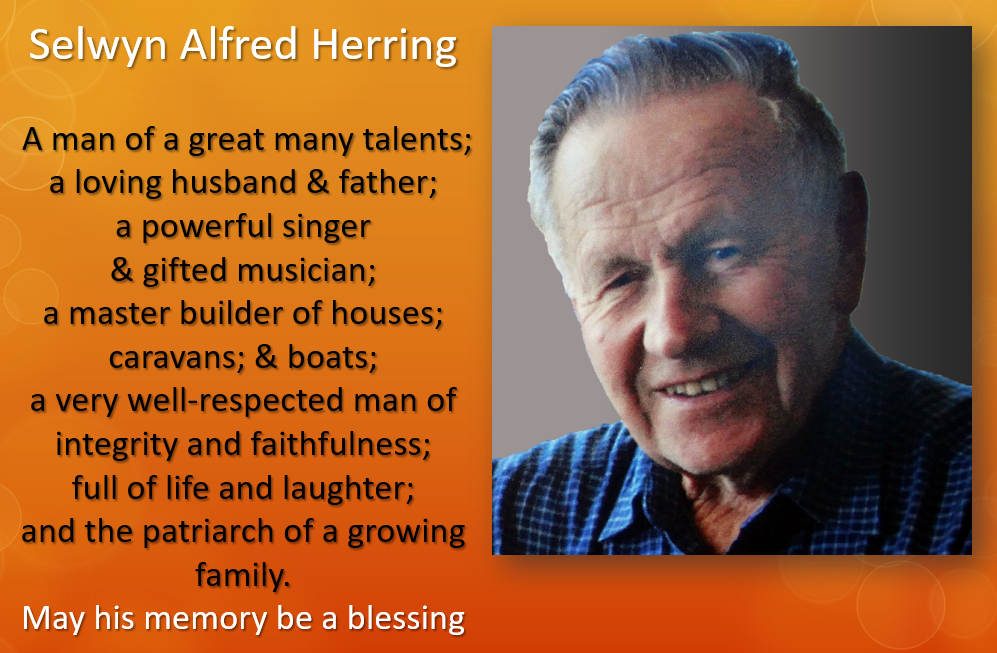
And it was also only some 2 years ago that I lost my Dad, the man that shaped my life the most, and whose many talents now seem almost mythical in their greatness.

And reflecting on the joy of children leads me to another blog post I wrote as part of a series on Happiness – https://globaltruthinternational.com/2013/09/27/the-ten-happiness-principles-3/ which brings me full circle and back to the Sabbath!

Shabbat Shalom!