To Climb The Mountain

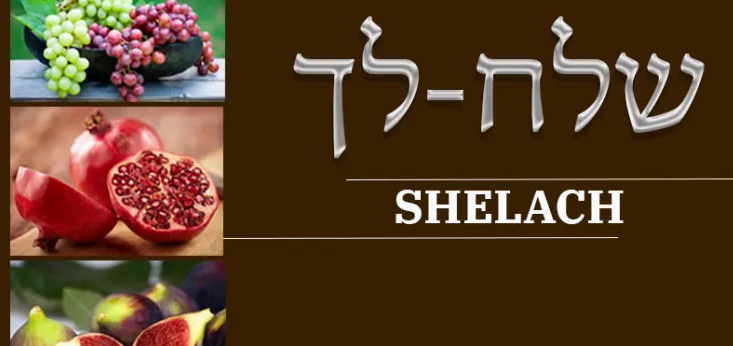
Rabbi Ari Khan has written an excellent article on last week’s Torah Portion (Shelach – Numbers 13-15)

To start with he argues that:

Of all the sins which the children of Israel perpetrated in the desert, the one with the most far-reaching consequences was the sin of the spies. While other offences generated a local’ concentrated response, in the case of the spies, while the perpetrators perished, the entire nation suffered for the next 40 years by being forced to languish in the desert.”

So why was this sin so great? What did they do that was so wrong. Very simply, they failed to appreciate what the purpose of their mission was and hence they totally failed to trust God and rely on Him and His deliverance. This sounds harsh. Surely they did not break any commandments or did they?

The core commandment, the most foundational instruction in the whole Bible is the Shema, and that is a recognition of the God of Israel and a call to love Him with your all. All your heart, strength, mind and soul. To do so is to trust Him. To fail to trust Him; to see this mission in critical terms; to only see the challenges and barriers; the giant enemies that occupied the Land, was to reject this commandment and trust. [But from our comfortable existence today, it still seems very harsh! Sometimes the lessons were need to teach our children require consequences that can seem very harsh as well.]
Moses did not send these great leaders of the 12 Tribes as spies, but rather he sent them on a spiritual journey to ascend the mountain of their homeland, to ascend to Hebron where the great Patriarch Abraham had purchased the first portion of the Land. The Land of Promise. These great leaders were supposed to fall in love with the Land.

According to Rabbi Khan, the Talmud contains a most sensible ruling that a man should not marry without first meeting his wife to be (arranged marriages were very common). So likewise here, Rabbi Khan argues that Moses is offering these representatives of the 12 Tribes an opportunity to tour the Land, to see it, to embrace it and to share a love of the Land with the people of their tribes. If they had done this, they could have entered the Land without conflict as the Almighty would have opened all the doors for them and removed their enemies before them.

The Almighty was with them, but they rejected His providence and instead only saw impossible odds. Once the people recognized their error they even reacted with bravado and said they would enter the Land and fight off their enemies, but Moses informed them that the Almighty would not now be with them and so they would fail.

This is a most salutary lesson for all of us.

We are to seek the direction of God; we are to trust Him even when the odds seem insurmountable. He will protect us and deliver us (often at the 11th Hour), if we heed the Shema and place our full trust in Him. But if instead we act on our own initiative, yet against His will we are most likely to fail.

Clearly, we need to learn to hear His Will, to heed His Instructions, His Torah. And to trust. True faith is trusting Him.

I highly recommend this great article by Rabbi Khan for the insight it provides – https://aish.com/48944726/

The 5th Word: Honour your parents!

The ‘Ten Commandments’ (or 10 Words) contain enormous truth and the deepest wisdom.

They were referred to many times by both Yeshua and the Apostle Paul as the bedrock of true faith; and they are summarized in what Yeshua declared the two greatest commandments as well as when the Apostle Paul quotes Leviticus 19:18 and states that:  “For the whole Torah is fulfilled in one word: You shall love your neighbour as yourself.”  – Gal 5:14.

Recognition and acknowledgment of these 10 Words as the Moral Code of the Universe is vital to our well-being. So what about the 5th Word?

Honour your parents!

“Honour your father and your mother, that your days may be long in the land that the Lord your God is giving you.” – Exodus 20:12 (ESV)

The only one of the Ten Words that contains a promise, a promise of a longer and better life, and also a promise to Israel that they would possess the Land of Israel for a much longer time-frame.

This Instruction being part of the 1st Tablet is first and foremost about God. The 1st tablet gives us 5 Words, 5 Instructions about how we are to relate to the Almighty and the 2nd Tablet gives us 5 Words/Instructions on relating to our fellow man.

Yet the 5th Word is also a bridge to the 2nd Tablet as it introduces us into life via our generation as children of our parents.

We are called to honour our parents:

  • to show deference to them;
  • to remember the sacrifice they made in raising us up;
  • not to shame them or belittle them,
  • not to neglect them or their memory.

And in doing so we can expect  or at least have some hope  that the same honour will be shown to us by our children, and even in this way alone it may prolong our life and length or broaden its impact.

This Instruction may seem very easy to heed if you have been blessed to have great parents (though no-one is perfect).

Yet even here, you may take them for granted or perhaps not even have the insight to recognize how blessed your upbringing has been. And then, if you were to, in some way abuse them, it would seem such abuse would cut even deeper.

If your parent(s) considers that they have generally made a good effort of raising you and you reject them in some way such as through expressing disgust or dissatisfaction in an offensive manner, even to the point of not wishing to be associated with them anymore, then clearly such parents would be extremely offended.

On the other side of the coin, as adult children, we need to give our parents a fair bit of slack. This is I think part of what honouring them entails. It can mean seeing them with ‘rose coloured’ glasses to some degree; being more tolerant of this short-comings at least as they relate to us, their children. Honouring and respecting perfection is easy; honouring and respecting flawed individuals not so much.

On a personal note, my Dad was an awesome Dad, yet when I got much older I noticed that he seemed to use me a little as a ‘punching bag’ (in a non-physical manner) when angry due to some incident and, especially it seemed, if my Mum had caused him some grief. He seemed to have so much respect for her (and perhaps a little fear of getting on her bad side!) that he looked for something or someone to take his anger or frustration out on and I felt this fell to me much more than anyone else, including my siblings. Some in the family felt it was because I was the most like him and this may have been true (though I deny it!).

My wife also thought this! Regardless, while it upset me, to the best of my recollection I never reciprocated in any way but just sucked it up. I think my great love and respect for this amazing man overrode any desire to ‘return fire’. So, I do believe I have for the most part really lived up to the 5th Word and to this day my love and respect for my late father and for my Mum remains extremely strong and deep.

But we are not commanded to love our parents, as love, though principally a commitment, is also much more and sometimes perhaps too much to expect if our parents have not lived up to all that God created them to be.

It is very hard to love parents who have abused you; or have never even been half-decent at the parenting role. But regardless, the Almighty does ask us to honour them. Our parents represented the our Father in Heaven to us as we grew up – they were His representatives in our young lives; they were like gods to us.

So, when we reach adulthood and honour our parents, we are in turn honouring the Almighty. This last point may not be obvious. The 10 Words were given to adults, for adults to heed. They were not given to children. Under Jewish jurisprudence over many centuries, children only reach an age of accountability at 13 years, so until then these Instructions are only of secondary importance to them.

But when adult children abuse their parents in some way whether through insults, shaming them or even physical or financial abuse, it is really a rejection by these adult children of the Almighty Himself. Clearly it brings great hurt to the parent(s), and the emotional pain may be much longer lasting than any physical pain, but I wonder how much more it grieves our Father in Heaven?

The 5th Word is one that really is in play for almost all adults (even once you parents have passed away, you still need to honour them memory and not bring shame to their good names). So I think we would all do well to reflect on this Word/Instruction on a regular basis and look to right any wrongs we may have committed in this regard in recent memory.